Call us

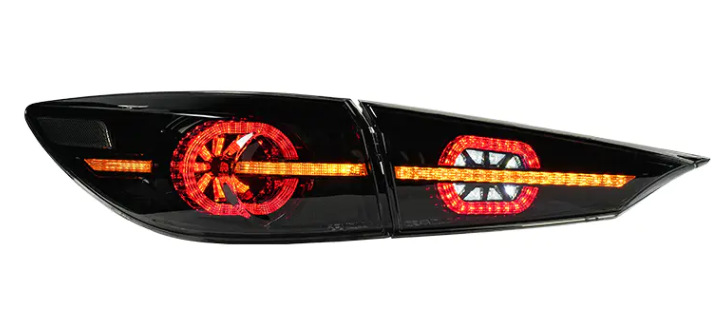
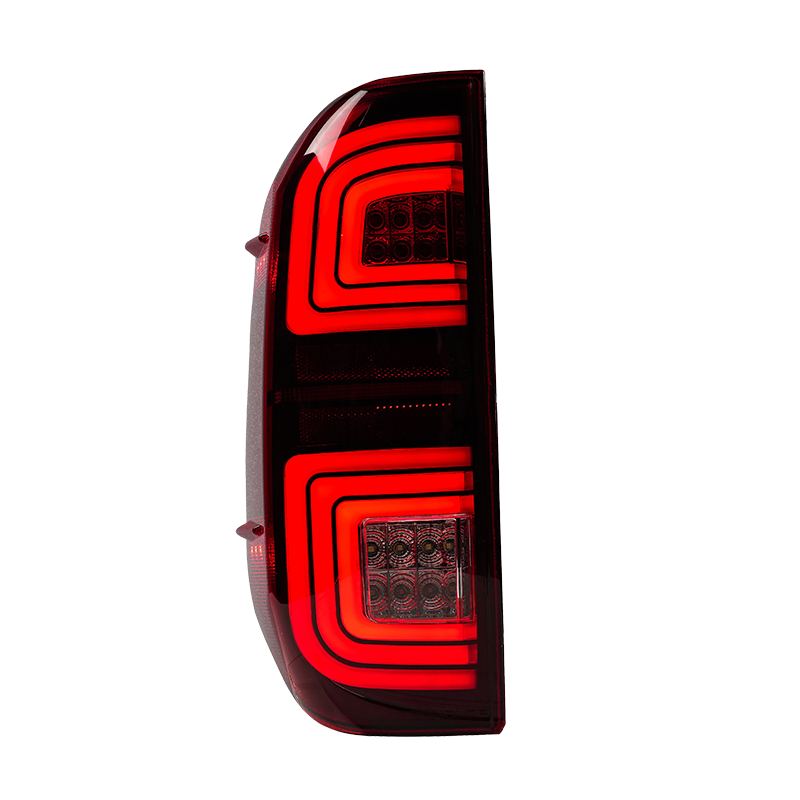
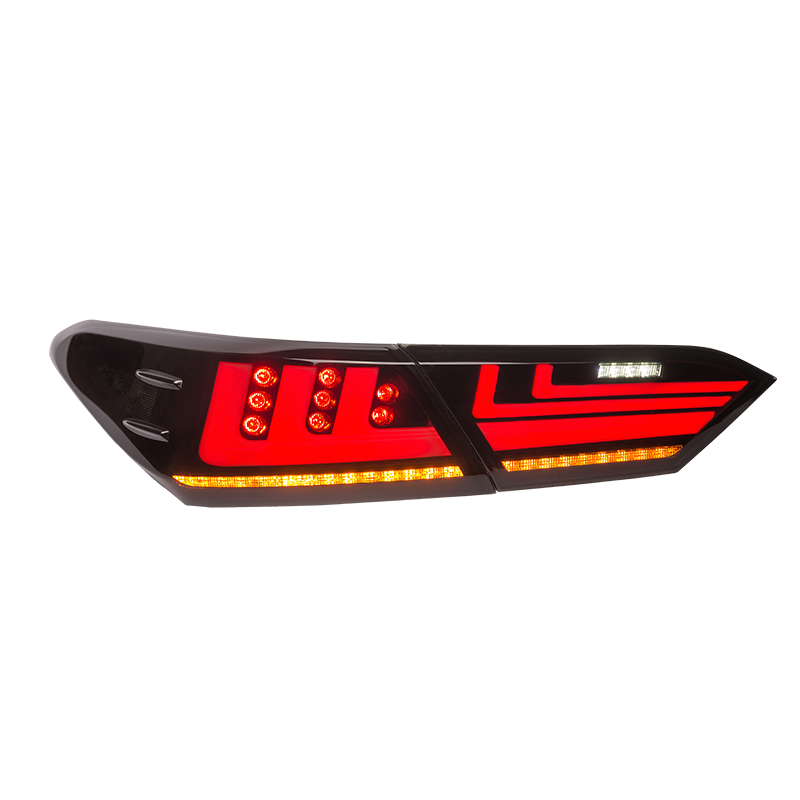
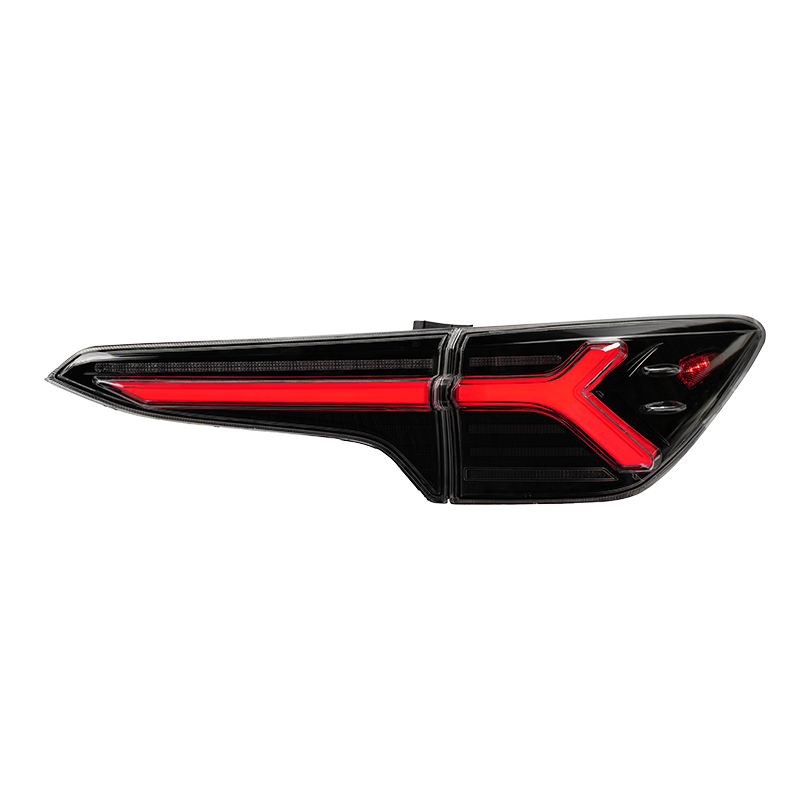
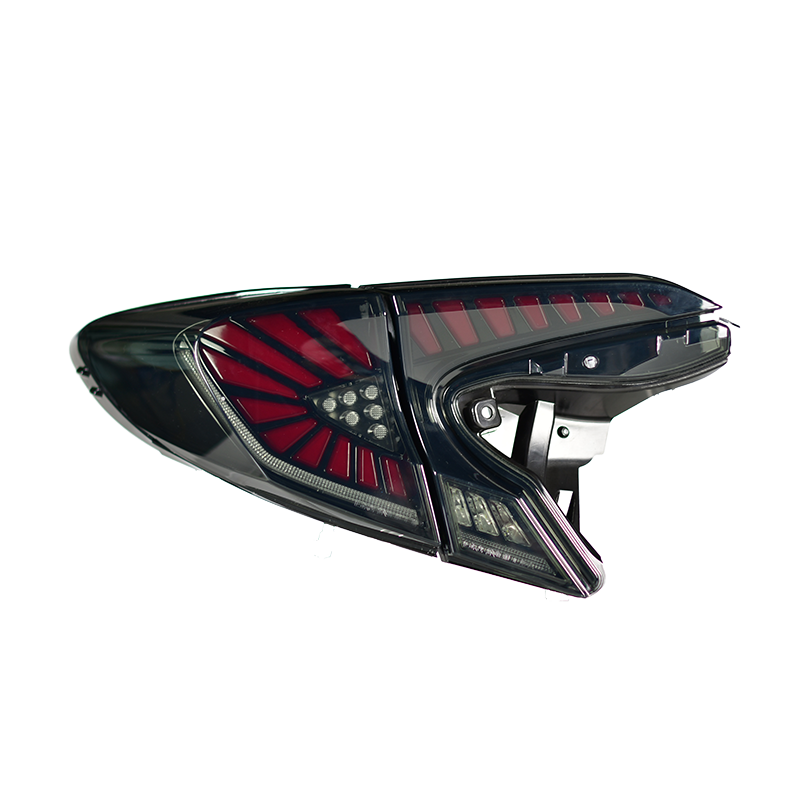
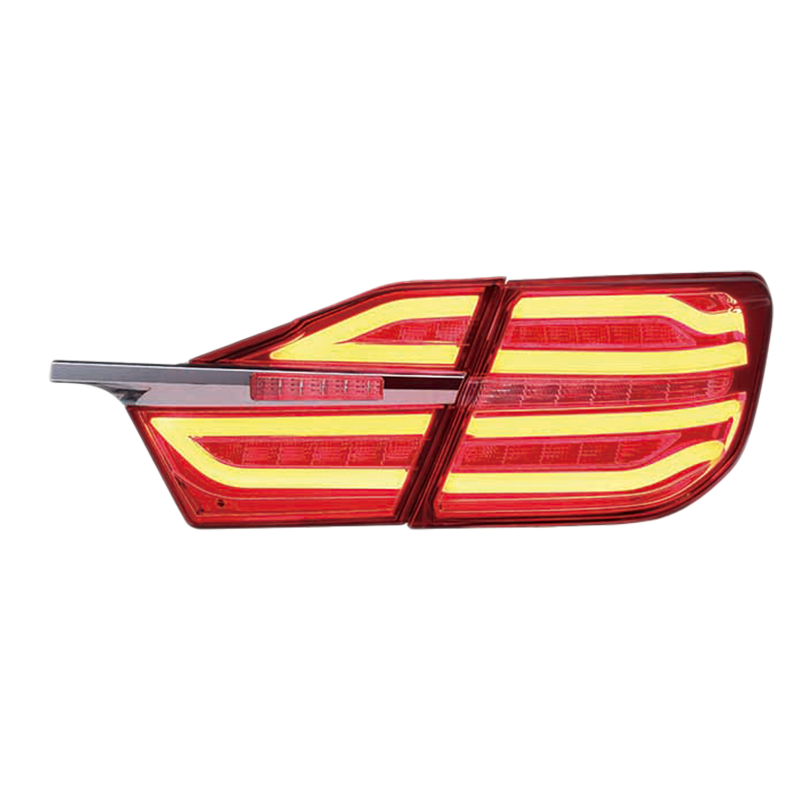
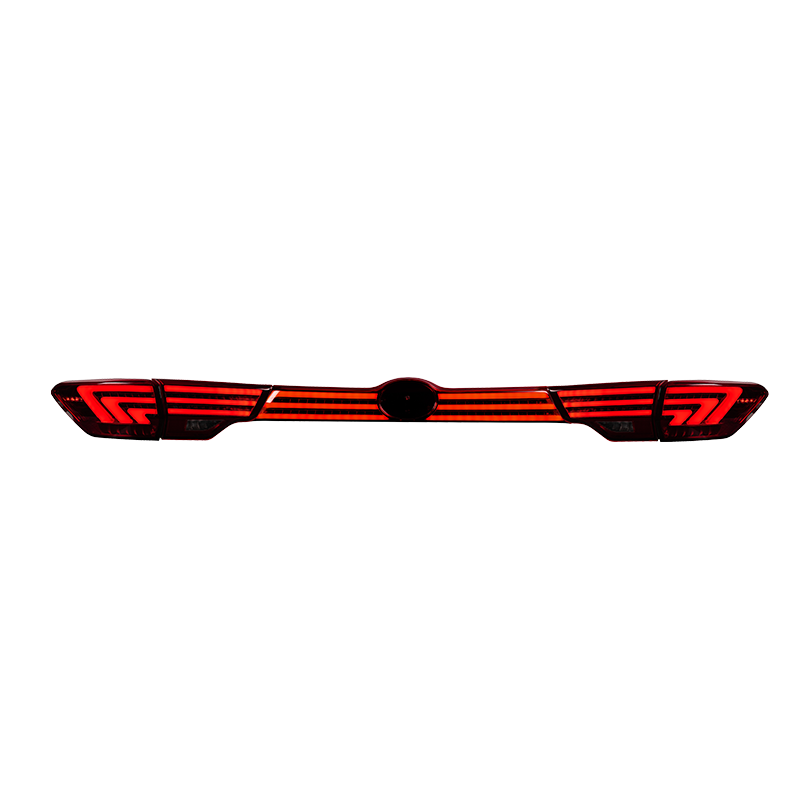
In recent years, vehicle lighting has moved beyond its original role. It is no longer just about being seen. LED Custom Tail Lights have gradually become part of a vehicle's identity, influencing how a car looks, how safe it feels, and how well the overall design comes together.
Behind every finished tail light is a long development path. What starts as a rough idea on paper eventually becomes a repeatable product made on a factory floor. This process connects design thinking, engineering detail, material choice, and production planning. Manufacturers working in established vehicle parts regions, including companies such as Taizhou Baozhiwei Vehicle Industry Co., Ltd. , reflect how design concepts are steadily turned into stable manufacturing output.
In the past, rear lighting was mainly about visibility and signaling. The function came first, and appearance followed. As LED technology became more common, that balance began to change. LED Custom Tail Lights offered more freedom in shape, light pattern, and layout. Designers could now match lighting more closely with body lines and exterior themes.
This shift affected both original equipment vehicles and the replacement market. Vehicle owners started to expect tail lights that not only work well but also look consistent with the rest of the car. Because of this, rear lighting is now treated as part of overall exterior design, not just an add-on component.
From an industry point of view, this change increased cooperation between styling teams and production planners. A design needs to look good, but it also needs to be made again and again without problems. That is why manufacturing concerns are often considered very early in the design stage.
The development of LED Custom Tail Lights usually begins with sketches and basic surface studies. Designers think about how light spreads across the rear of the vehicle. They also consider how the shape fits with surrounding body panels and how the light will look in different driving conditions.
Several points guide decisions at this early stage:
These points help narrow down design options before technical work begins. Even at this early moment, production limits are already part of the discussion. Some designs look simple on paper but are difficult to produce. Early alignment helps avoid large changes later.
After a design direction is chosen, engineers step in to turn ideas into workable structures. This phase focuses on internal layout, housing strength, and heat management. LED Custom Tail Lights need stable internal conditions to keep light output consistent over time.
Engineers and designers work closely together. Small changes in thickness, angle, or spacing are made to improve durability without changing the overall look. Mounting points, sealing surfaces, and internal supports are adjusted step by step.
Typical engineering priorities include:
Material selection has a direct impact on the performance and lifespan of LED Custom Tail Lights. Housings, lenses, and internal frames must work together under heat, vibration, and weather exposure. Surface quality and compatibility with molding or assembly processes are also considered.
At the same time, component coordination becomes more detailed. LEDs, reflectors, circuit boards, and connectors must fit precisely within limited space. Even small dimensional changes can affect light distribution or assembly accuracy.
To maintain consistency, teams often define internal reference standards. These guide component placement and tolerances. Later on, these references become critical inside a LED Custom Tail Lights Factory, where stable and repeatable production is required.
Before moving toward mass production, physical prototypes are built. These samples allow teams to evaluate the design in real conditions. Appearance, light uniformity, sealing, and assembly steps are all checked during this phase.
Prototypes often reveal issues that drawings or simulations do not show, such as:
As the design becomes stable, focus shifts to manufacturing readiness. A LED Custom Tail Lights Factory must produce the same quality across many production cycles. To make this possible, the design is reviewed from an assembly and process standpoint.
Production engineers look at how parts move through the factory. They study fixture design, assembly sequence, and inspection points. One key goal is to simplify assembly while keeping the original design intact.
The relationship between design and production is often summarized like this:
| Design Aspect | Production Focus | Practical Outcome |
|---|---|---|
| Housing shape | Mold consistency | Stable dimensions |
| Lens surface | Handling method | Fewer surface marks |
| Internal layout | Assembly order | Reduced rework |
| Mounting points | Fixture alignment | Repeatable fit |
This alignment ensures that what worked in prototypes can be reproduced efficiently on the factory floor.
Before full-scale production starts, planning expands to include supply coordination. Materials and components must arrive on time and in the right order. Even small delays can disrupt assembly flow inside a LED Custom Tail Lights Factory.
To prevent this, factories usually set up internal checks across departments. Design files, component readiness, and work instructions are reviewed together. This shared confirmation helps reduce uncertainty during production ramp-up.
At this stage, design work slowly gives way to operational control. Still, design teams often stay involved. When real production conditions reveal small issues, quick adjustments can be made. This ongoing connection between design and production helps ensure stable output over time.
After all the preparation work is finished, production activity moves fully onto the shop floor. In a LED Custom Tail Lights Factory, assembly is not treated as one continuous action. It is divided into clear stages, handled step by step.
In most cases, the assembly flow follows a practical order:
Breaking the work into stages helps keep variation under control. Workers and equipment stay within clear limits. Each station focuses on its own task, which makes it easier for every unit to stay close to the approved design.
Even with automated tools and fixtures in use, manual work still plays an important role. Some details are easier to judge by eye and by hand. Machines help with repeatability, but people are still needed for certain checks.
For LED Custom Tail Lights, manual attention is often given to:
These checks may look simple, but they matter. Many small issues are caught here. If they pass unnoticed, they can cause trouble later in the process.
Quality control does not wait until the end of assembly. Inspection points are spread along the production line. Each one focuses on a specific part of the process.
Typical in-process checks include:
By checking along the way, a LED Custom Tail Lights Factory reduces the chance of hidden problems building up. It also allows adjustments to be made locally, without slowing down the whole line.
During assembly, attention is already being paid to how the product will behave in daily use. Final durability testing may come later, but the foundation is set on the factory floor.
Assembly methods are usually designed to support:
Once assembly is finished, units move to a final inspection area. This stage looks at the overall condition rather than individual components.
Common finishing steps include:
Packaging is not only about protection. It also affects how products move and are stored. Inside a LED Custom Tail Lights Factory, packaging methods are often planned together with handling and stacking requirements.
Logistics teams adjust packaging formats to reduce movement during transport. Careful packing helps prevent surface damage and keeps production output aligned with delivery schedules. At this point, the product is ready to move beyond manufacturing.
After packaging, LED Custom Tail Lights enter the distribution system and are sent to warehouses or downstream partners. Coordination between production planning and logistics helps avoid delays or unnecessary stock buildup.
Although this stage happens outside the factory, feedback often returns from the field. Notes from transport, storage, or installation can influence future assembly methods or design details.
Production does not stay the same over time. As work continues, feedback from the shop floor, logistics teams, and real-world use is collected.
Sometimes a small change is enough. Adjusting an assembly sequence or improving a material treatment can make the process smoother and more stable. These changes are usually gradual, but their impact adds up.
Over time, experience gained in production flows back into earlier design stages, helping future development move more smoothly.
The path from design drawings to factory output is built on cooperation across different roles. LED Custom Tail Lights are the result of visual ideas, engineering detail, and practical manufacturing coming together.
Inside a LED Custom Tail Lights Factory, each step builds on the previous one. Design intent is kept visible, while production realities shape how that intent is delivered at scale.
As vehicle lighting continues to evolve, the connection between design and manufacturing remains essential. Progress usually comes through steady refinement, not sudden change, gradually moving custom rear lighting from concept into everyday use.
We are a modern headlight manufacturer that integrates R&D, design, production and sales. We mainly produce headlamps, taillights, daytime running lights and other automotive lighting products.
Add: No.3 Shiyang Road, Ningxi Town, Huangyan District, Taizhou City, Zhejiang Province, China
Tel: +86-13105675552 / +86-15606586299
Fax: +86-576-89161556
E-mail: [email protected]
Copyright © Taizhou Baozhiwei Vehicle Industry Co.,Ltd. All Rights Reserved.

 English
 русский
 Español