Call us

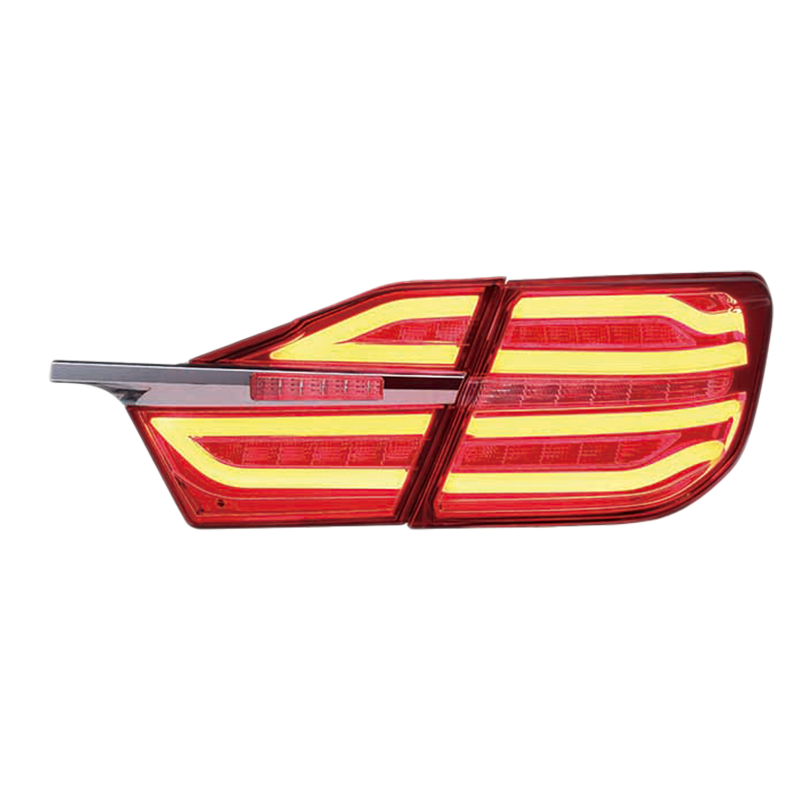
The lights are on, everything powers up, but one side sits slightly higher than the other - or the beam spreads unevenly across the wall during your nighttime check. This is not the kind of problem you notice in the parking lot at noon. It shows up at dusk, or when a car behind you flashes their high beams because your tails are throwing light at an awkward angle. Custom Car Led Tail Lights introduce more variables than a simple OEM swap, and alignment is one of them. Getting the beam pattern right is partly a mechanical process and partly an understanding of how the housing, the LED board, and the mounting surface interact when everything comes together.
The beam pattern that reaches the road or the car behind you originates from the LED elements inside the housing, but it is shaped by the reflector, the lens, and the physical orientation of the entire assembly. If the housing is not seated squarely in its mounting recess, everything else shifts with it.
Common sources of misalignment at the housing level include:
Yes, and in ways that are not always obvious during inspection with the vehicle stationary. A clear lens and a diffused lens interact differently with the same LED source. A clear lens lets the LED array project more of a direct point-source pattern, while a diffused lens spreads that output across a wider angle.
The problem arises when a replacement unit uses a different lens type than the original. The new unit may appear to be mounted correctly, but the beam pattern it produces does not match what the vehicle's light zones were designed around. If the lens is projecting light further up the wall than expected, it is not necessarily misaligned - it may simply be a different optical design producing a different output distribution.
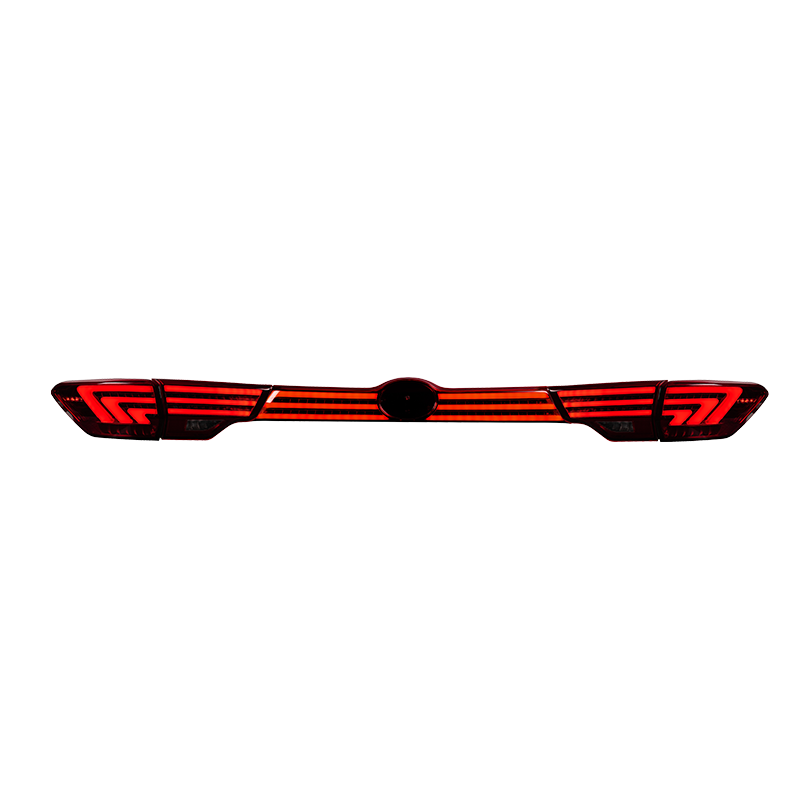
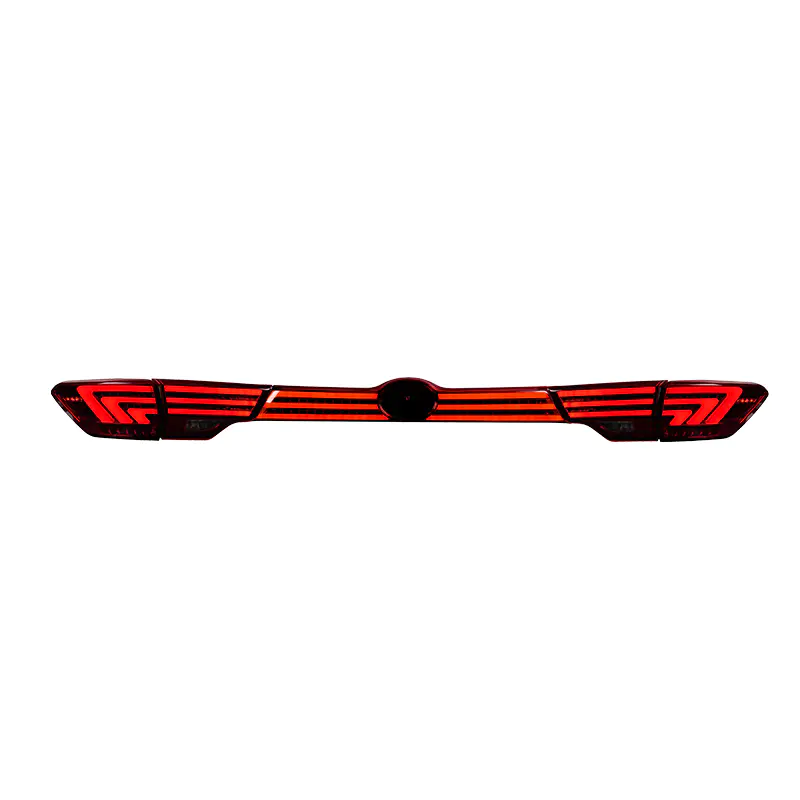
Multi function LED tail lights combine brake, running, reverse, and in some cases turn signal functions in a single housing. Each function uses different elements within the assembly, and they can have slightly different optical characteristics from one another. A housing that aligns the brake function correctly may project the running light at a slightly different angle if the LED positions for each function are not co-planar within the housing.
This is why installation quality matters more with complex multi-function assemblies than with single-function units. A small tilt in the housing affects all functions simultaneously, but the function with the narrowest beam angle reveals the misalignment more visibly than others.
The wall method is a practical approach that does not require specialized equipment. It works by projecting the beam pattern onto a flat, vertical surface at a defined distance from the vehicle, then comparing the projected pattern to a reference.
Steps to set up the check:
If the output center sits consistently above, below, or to one side of the housing center, the housing is either angled or the LED board inside is not centered in the reflector.
A beam that sits higher than expected on the wall indicates the housing is angled upward relative to the vehicle centerline. A beam that spreads more to one side suggests the housing is rotated slightly around its vertical axis.
For Car Led Tail Lights designed with a defined light distribution zone - such as those meeting specific road regulations - the pattern on the wall should be broadly symmetric left to right and should not project significantly above the level of the housing centerline at the defined test distance. Patterns that extend significantly above that line create glare for drivers behind the vehicle.
On vehicles where the tail light housing is accessible from inside the trunk or through a removable panel, adjustment is a matter of loosening the mounting hardware, repositioning the housing, and retorting in the corrected position.
The sequence:
Some tail light housings mount to fixed studs with limited angular adjustment. If the misalignment is caused by a tolerance difference between the aftermarket unit and the vehicle, the housing may sit in only one position regardless of how the fasteners are tightened.
In this case, options include:
OEM LED tail lights provide the reference alignment for a vehicle. If the vehicle originally came equipped with LED tail lights from the factory, those units have been validated against the vehicle's mounting geometry and optical requirements. When aftermarket custom units are installed, their alignment behavior should be compared against the OEM baseline.
If the OEM units projected correctly and the aftermarket units do not - despite being installed in the same mounting points - the difference is in the aftermarket unit's optical design or housing geometry, not in the vehicle.
| Type | Alignment Complexity | Common Issues | Adjustment Approach |
|---|---|---|---|
| OEM LED Tail Lights | Low – factory-validated fitment | Aging mounts, collision repair | Standard re-seating |
| Custom Car LED Tail Lights | Moderate – may vary from OEM geometry | Tolerance mismatch, bracket fit | Housing adjustment or shimming |
| Waterproof LED Tail Lights | Low to moderate – sealed housing | Sealing grommet affecting fit | Check grommet compression on mounting |
| Multi Function LED Tail Lights | Higher – multiple light zones in one unit | Zone-specific misalignment | Full housing check plus zone verification |
| Universal Fit LED Tail Lights | Higher – no vehicle-specific geometry | Significant bracket variation | Custom bracket fabrication often required |
The alignment complexity column reflects the additional steps needed beyond a standard installation. It is not a reflection of product quality - it reflects how much the installation depends on fit precision versus adjustment.
Waterproof LED tail lights use gaskets, grommets, or sealant to prevent moisture ingress at the housing perimeter and at cable entry points. These sealing components add a layer of material between the housing flange and the body panel, which can shift the housing position slightly relative to what the mounting hardware was designed to accommodate.
If the housing sits slightly proud of the body surface after installation - protruding outward more than the OEM unit did - the sealing gasket may be contributing. Check that the gasket is compressed evenly around the full perimeter of the housing and that the mounting hardware is tightened to the point where the gasket is fully seated.
On vehicles that see regular road use, vibration gradually works on the housing mounting. A housing that was correctly aligned at installation may shift slightly as the mounting points work loose or as the sealing gasket compresses unevenly with temperature cycling.
For waterproof LED tail lights in commercial or high-use vehicle applications, a periodic alignment check - particularly after any significant road vibration exposure - catches gradual drift before it becomes a visibility or compliance issue.
A car led tail light that projects correctly serves two functions: it makes the vehicle visible from behind, and it does so without creating glare or confusion for other road users. A beam that is too high creates glare for drivers behind the vehicle. A beam that is too low or too narrow reduces the detection distance available to following traffic.
In jurisdictions where tail light output distribution is regulated, an incorrectly projecting tail light may be a compliance issue regardless of whether the unit is otherwise functional. The compliance concern applies to custom, aftermarket, and OEM replacement units equally - the relevant standard is the beam pattern produced, not the label on the unit.
Symmetry between the left and right tail lights matters for both safety and appearance. A vehicle where one tail light projects significantly higher or more outward than the other looks asymmetric under braking and may give following drivers a false impression of the vehicle's width or brake point.
After completing the alignment procedure, verify symmetry by standing directly behind the vehicle and observing the projected pattern on the wall simultaneously for both sides. Both patterns should be at the same height and should spread to approximately the same angular extent.
Alignment problems are significantly less common when the lights are designed with precise housing geometry, consistent LED board positioning, and mounting features that match the vehicle application. A unit where the LED elements are correctly positioned within the reflector from the factory requires only correct installation - not post-installation adjustment. Taizhou Baozhiwei Vehicle Industry Co.,Ltd. manufactures Car Led Tail Lights for OEM, custom, and replacement applications, including waterproof LED tail lights and multi function LED tail lights designed for accurate installation and consistent beam output. Their product range includes application-specific fitments developed to match vehicle mounting geometry and optical requirements. If you are sourcing tail lights for a vehicle application or evaluating custom LED tail light options for a product line, reaching out with your vehicle type, mounting specifications, and light function requirements gives their team the information needed to recommend a suitable configuration.
We are a modern headlight manufacturer that integrates R&D, design, production and sales. We mainly produce headlamps, taillights, daytime running lights and other automotive lighting products.
Add: No.3 Shiyang Road, Ningxi Town, Huangyan District, Taizhou City, Zhejiang Province, China
Tel: +86-13105675552 / +86-15606586299
Fax: +86-576-89161556
E-mail: [email protected]
Copyright © Taizhou Baozhiwei Vehicle Industry Co.,Ltd. All Rights Reserved.

 English
 русский
 Español