Call us

Ordering tail lamps in bulk for a Toyota Hiace isn't as simple as matching the name. The Toyota Hiace Tail Lamp has multiple generations, model codes, production years, regional specs. Tail lamp assemblies differ in housing dimensions, mounting points, connectors, lighting functions, regulatory requirements. For wholesalers, distributors, importers, OEM buyers—verifying compatibility before a big order saves you from costly returns, installation headaches, excess inventory. A solid verification process combines vehicle ID, part number cross-referencing, dimensional checks, electrical testing, supplier quality assessment.
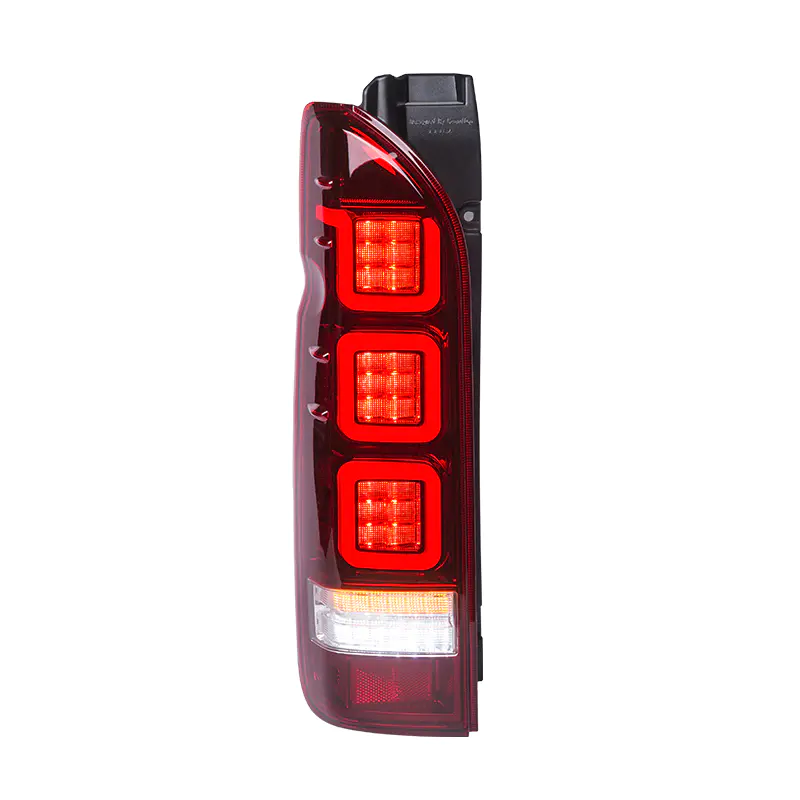
Identify the Exact Toyota Hiace Model and Production Year
First things first: which vehicle versions does the replacement lamp need to fit? Similar-looking Hiace models may use different assemblies because of generation changes, mid-cycle updates, regional equipment specs. Collect production year, chassis or model code, destination market, body configuration. Where available, use the VIN or chassis number to check original equipment specs through a reliable parts catalog or authorized Toyota parts source. Also determine left-hand or right-hand lamp. Some listings cover several variants—confirm each listed application has been verified.
Before requesting a quote, prepare a fitment spec: model year, chassis code, market, installation side, required lighting functions. That gives the supplier a clear basis for identifying the correct component.
Verify the OEM Part Number and Replacement Reference
The OEM part number is an important reference. But check it against the actual vehicle spec. Confirm whether a proposed replacement is a complete assembly or just a component. Ask the supplier for the OEM reference number and any documented replacement or interchangeability numbers. Verify through a reliable parts catalog or manufacturer documentation.
Watch for superseded part numbers and regional variations. Two assemblies may look almost identical while differing in connector design, internal reflectors, bulb configuration, supported lighting functions.
| Fitment item | What buyers should verify | Why it matters |
|---|---|---|
| Model year and chassis code | Match against the supplier's fitment list | Reduces generation and variant mismatches |
| OEM part number | Confirm the original and replacement references | Helps establish application compatibility |
| Installation side | Identify left-hand or right-hand assembly | Prevents incorrect-side orders |
| Housing dimensions | Compare length, height, depth, and contours | Confirms physical compatibility |
| Mounting points | Check hole positions, tabs, and fasteners | Prevents installation difficulties |
| Electrical connector | Compare plug shape, pin count, and terminal layout | Helps ensure correct electrical connection |
| Lighting functions | Verify all required functions and approvals | Supports safe and compliant operation |
Documentation incomplete? Ask for clarification before approving. "Fits Toyota Hiace" is not enough evidence for a multi-variant bulk purchase.
Compare Housing Dimensions and Mounting Points
Physical fitment matters. Differences in mounting-hole positions, housing depth, lens contours can prevent proper installation—even when the general shape looks right. Ask for a dimensional drawing showing overall length, height, depth, mounting locations, connector position, relevant housing features. Compare with an original assembly or verified vehicle measurements.
For a new supplier, inspect a physical sample whenever possible. Check mounting tabs are intact, housing sits evenly against the body panel, fastener locations align without forcing or modification. Inspect the lens for scratches, cracks, discoloration, molding defects. Examine housing joints and sealing surfaces for gaps or irregularities.
A successful fitment check confirms the lamp installs using intended mounting points and hardware. Drilling new holes, bending tabs, modifying the body—those indicate a compatibility problem.
Check Connectors, Wiring, and Lighting Functions
A connector that looks correct doesn't guarantee electrical compatibility. Different assemblies may use different pin assignments, bulb types, lighting technologies. Confirm connector shape, pin count, terminal arrangement, specified bulb or LED configuration against the original part. If adapters or wiring modifications are needed, establish that before ordering.
Depending on the vehicle version, the tail lamp may incorporate tail lights, brake lights, turn signals, reverse lights, reflectors. Verify every function required for the application. Sample testing should check each function for normal operation, secure connections, flickering, intermittent faults. LED assemblies—check for compatibility issues with the vehicle's electrical system.
For international orders, confirm lighting approvals and markings required in the destination market. Requirements depend on jurisdiction and specific lamp functions. Request relevant compliance documentation where necessary.
Approve a Sample Before Placing a Bulk Order
A pre-production or production sample lets you evaluate fitment and workmanship before committing to a large quantity. Ideally, test on a representative vehicle. No vehicle available? Compare directly with a verified original assembly and complete electrical checks with suitable equipment.
Use a documented inspection procedure:
If an order covers several model years or variants, test each distinct fitment configuration. Approval of one lamp doesn't establish compatibility across every model the supplier lists. Keep the approved sample or a complete inspection record as a reference for future batches.
Evaluate Supplier Quality Control and Packaging
Sample fitment is only part of bulk procurement. Can the manufacturer maintain the same specs throughout production? Ask about dimensional inspections, connector assembly checks, final functional testing, defect handling, batch traceability. Clarify agreed acceptance criteria and the process for nonconforming products.
Packaging matters because lenses and mounting tabs can get damaged in transit. Confirm each assembly has adequate protective packaging. Labels should clearly identify part number and installation side. For orders with multiple fitments, request separate identification for each model application. Clear carton labels and consistent part numbering help warehouse staff avoid picking errors.
Establish a Reliable Toyota Hiace Tail Lamp Sourcing Process
Before approving a bulk order: verify vehicle application, cross-reference OEM part number, compare physical dimensions, check electrical compatibility, test representative samples. Confirm the supplier can maintain approved specs and provide necessary quality and compliance documentation. A documented fitment checklist reduces installation complaints, unnecessary returns, inventory mistakes. Technical verification plus supplier quality control builds a stronger foundation for consistent purchasing and long-term aftermarket parts supply.
We are a modern headlight manufacturer that integrates R&D, design, production and sales. We mainly produce headlamps, taillights, daytime running lights and other automotive lighting products.
Add: No.3 Shiyang Road, Ningxi Town, Huangyan District, Taizhou City, Zhejiang Province, China
Tel: +86-13105675552 / +86-15606586299
Fax: +86-576-89161556
E-mail: [email protected]
Copyright © Taizhou Baozhiwei Vehicle Industry Co.,Ltd. All Rights Reserved.

 English
 русский
 Español