Call us

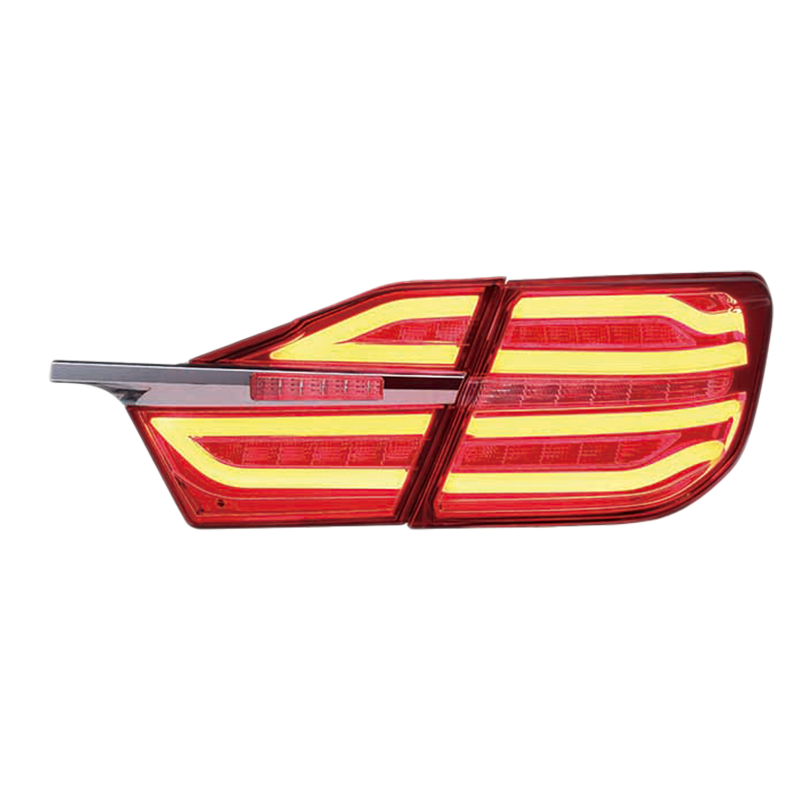
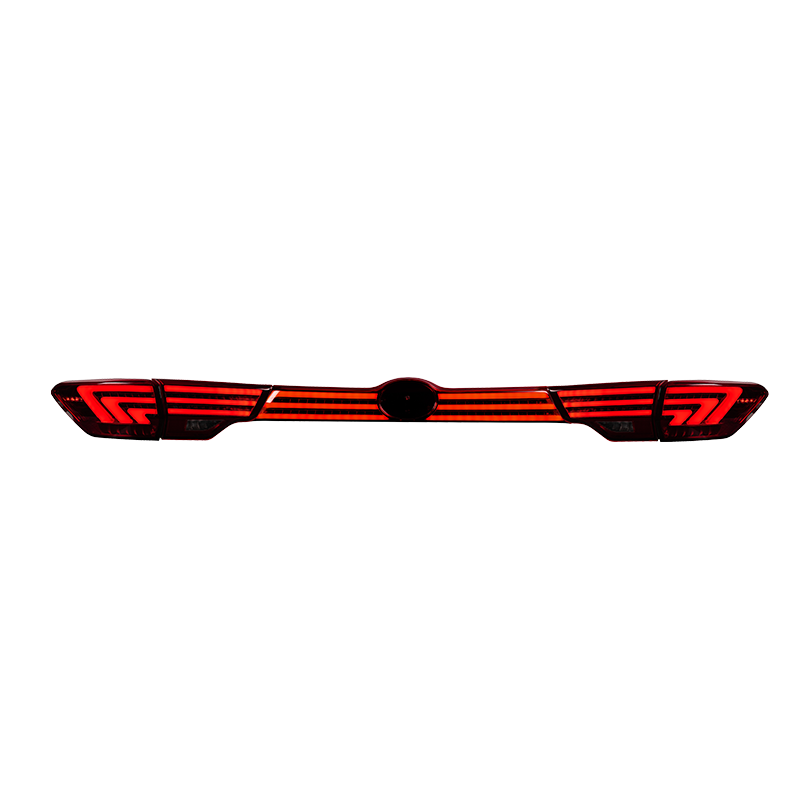
You installed new LED tail lights, turned on the ignition, and something immediately felt wrong. The turn signal flashes at double speed, a warning light appears on the dashboard, or the lights flicker unpredictably. These are not random faults. They follow directly from a single missing component, and understanding why helps you decide how to fix it properly. Multi Function LED Tail Lights and other modern LED assemblies bring genuine advantages in visibility and longevity, but they introduce an electrical compatibility issue that a resistor is specifically designed to solve.
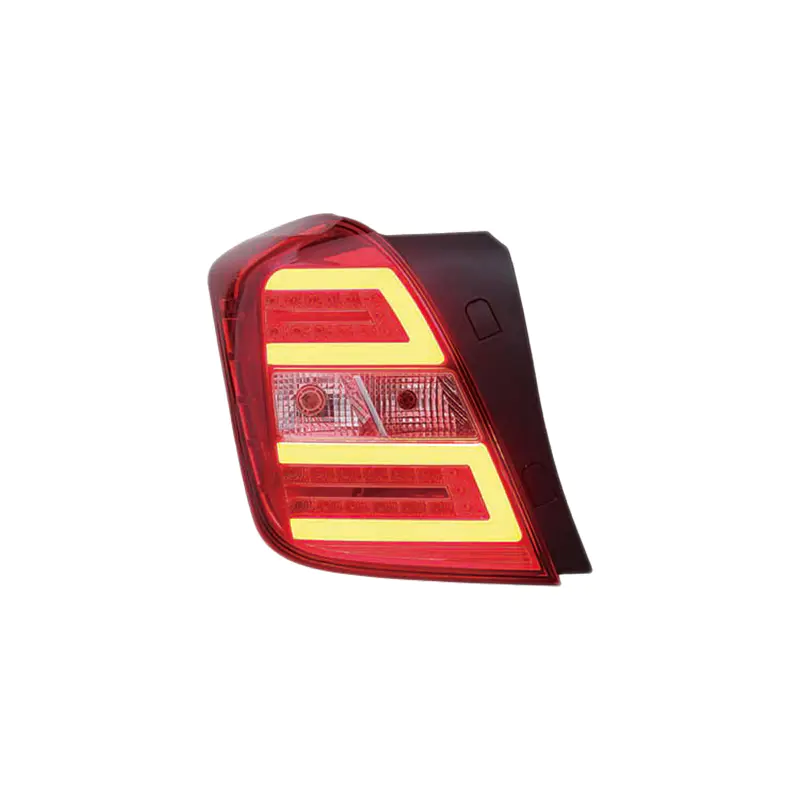
Modern vehicles do not simply send power to a light and assume it works. The electrical control unit actively monitors the current flowing through each lighting circuit. When a bulb is functioning normally, it draws a predictable amount of current. When that current drops below the expected range, the system interprets the change as a failed bulb.
This monitoring system was designed around halogen bulbs, which draw significantly more current than LEDs. When you replace a halogen with an LED unit, the circuit suddenly draws far less current than the vehicle expects. The ECU reads that drop as a bulb failure, triggering the responses that most installers encounter immediately after switching to Car Led Tail Lights.
The turn signal circuit controls flash rate based on circuit resistance. With a halogen bulb, resistance is high enough to produce a standard flash rhythm. Replace that bulb with an LED and resistance drops sharply. The reduced resistance causes the turn signal relay to cycle faster than normal, producing the rapid flashing commonly called hyperflash.
Hyperflashing is not just an annoyance. In many regions it is a vehicle inspection failure point because it affects how clearly your turn signals communicate to other drivers.
The ECU's bulb-out detection works on the same current-monitoring principle as the turn signal relay. When it detects abnormally low current in the tail light circuit, it triggers a bulb failure warning on the instrument cluster. This happens even when the LED itself is working perfectly. The light is functioning, but the system does not recognize it as functioning because the current signature does not match expectations.
Without a resistor completing the circuit load, some vehicles produce unstable voltage delivery to the LED. The result is visible flickering, especially at lower speeds or when other electrical loads are active. In some cases the light may appear dim or fail to activate consistently.
A load resistor is wired in parallel with the LED. Its job is to draw additional current from the circuit so that the total draw matches what the ECU expects from a halogen bulb. With the resistor in place, the system sees a familiar current level, the bulb-out warning disappears, and the turn signal returns to its normal flash rate.
The resistor does not change how the LED operates. It simply fills the gap between what the LED draws and what the vehicle's monitoring system expects to see.
Installation involves connecting the resistor between the positive and ground wires of the affected light circuit. It runs alongside the LED rather than in series with it. Because the resistor converts excess electrical energy into heat, placement matters. Common guidance includes:
Some LED assemblies are engineered specifically for vehicles with active load-monitoring systems. These units include internal circuitry that adjusts the effective load presented to the ECU, eliminating the need for external resistors. They are often labeled as CANbus-compatible or error-free.
For installers who prefer a cleaner wiring setup, or for applications where heat generation from resistors is a concern, Waterproof LED Tail Lights and other assemblies built with internal error cancelers offer a plug-and-play solution. The compatibility work is done inside the unit rather than in the vehicle's wiring.
| Factor | Load Resistor Approach | CANbus-Compatible LED |
|---|---|---|
| Upfront cost | Lower | Higher |
| Wiring complexity | Requires additional wiring | Plug-and-play in most cases |
| Heat generation | Resistors generate heat in use | Minimal additional heat |
| Long-term reliability | Resistor can fail independently | Fewer separate components |
| Suitable for OEM replacement | Works with modification | Designed for direct replacement |
| Custom application flexibility | Flexible across many circuits | Varies by product specification |
Neither approach is universally correct for every situation. The right choice depends on the vehicle's electrical architecture, the installation environment, and whether a clean factory-style fit is a priority.
Vehicles using a CANbus network distribute electrical signals and monitoring data across a shared communication system. Lighting circuits on these vehicles are monitored more precisely than in older wiring architectures. Skipping the resistor on a CANbus vehicle tends to produce more immediate and more persistent errors than on non-CANbus systems.
Common CANbus-specific responses to a missing resistor include:
Custom Car Led Tail Lights intended for CANbus vehicles should be confirmed as compatible before installation. Retrofitting standard LEDs into a CANbus system without either a resistor or internal error canceling circuitry reliably produces these fault responses.
The most common outcome of skipping a resistor is an error code or hyperflash, neither of which causes lasting harm to the vehicle's electrical system. Remove or replace the LED with a properly loaded circuit and the fault clears.
However, sustained operation with an incorrectly loaded circuit can create secondary issues in specific scenarios:
For OEM LED Tail Lights replacing factory halogen assemblies, the compatibility question is often resolved at the product level. Assemblies manufactured for direct OEM replacement are typically engineered to match the original load profile without additional modification.
After installing LED tail lights with a resistor or a CANbus-compatible unit, verify the following before considering the installation complete:
If any of these checks reveal a problem, the most common cause is either an incorrect resistor wattage for the circuit or a grounding issue introduced during installation.
The resistor question comes up because LED tail light manufacturing and vehicle electrical compatibility are not always addressed together. An assembly that looks correct on the surface may still require additional work to function without errors on the target vehicle. For importers, distributors, and fleet operators sourcing Car Led Tail Lights at volume, understanding whether a product ships with error-canceling capability, what vehicle types it has been verified on, and whether OEM-specification load profiles are available matters as much as the light output itself. Taizhou Baozhiwei Vehicle Industry Co., Ltd. produces LED tail light assemblies including Waterproof LED Tail Lights, Custom Car Led Tail Lights, and OEM LED Tail Lights with attention to electrical compatibility requirements across vehicle platforms. If your sourcing requirements include CANbus compatibility, specific load profiles, or custom assembly specifications, reaching out with your vehicle application details allows for a more targeted product recommendation.
We are a modern headlight manufacturer that integrates R&D, design, production and sales. We mainly produce headlamps, taillights, daytime running lights and other automotive lighting products.
Add: No.3 Shiyang Road, Ningxi Town, Huangyan District, Taizhou City, Zhejiang Province, China
Tel: +86-13105675552 / +86-15606586299
Fax: +86-576-89161556
E-mail: [email protected]
Copyright © Taizhou Baozhiwei Vehicle Industry Co.,Ltd. All Rights Reserved.

 English
 русский
 Español