Call us

Tail lights used to do a fairly simple job: show the vehicle's position and signal when it brakes or turns. Newer designs do more. LED segments can light up in sequence, brightness can be controlled electronically, and some systems run welcome animations when the vehicle is unlocked.
For vehicle manufacturers and distributors, these features bring more options, but also more things to check. A tail light needs to work with the vehicle's electronics, meet local lighting rules, and hold up under everyday driving conditions.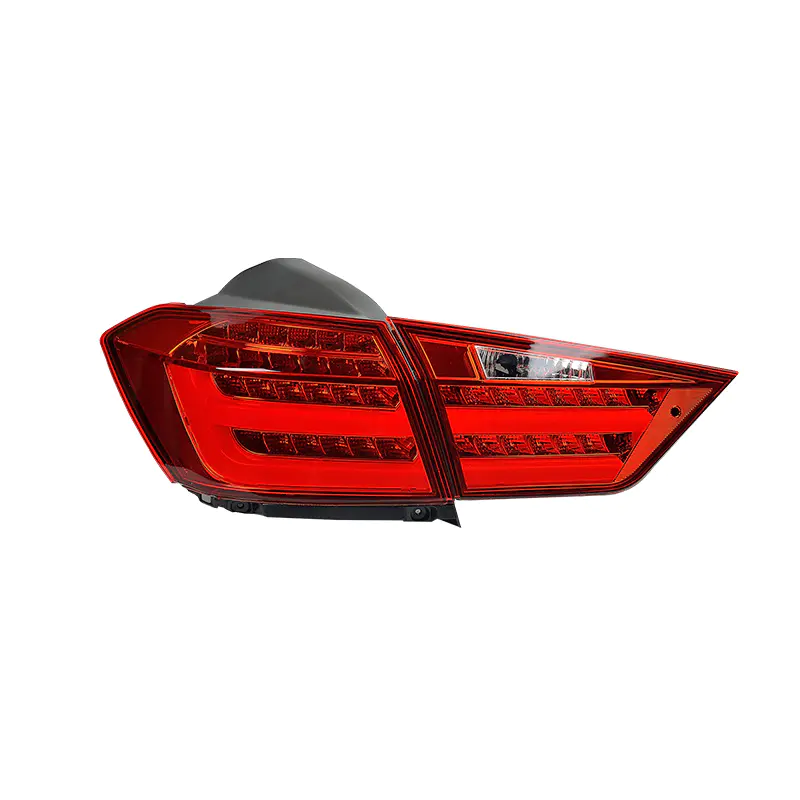
How Smart Tail Light Technology Improves Vehicle Communication
A rear light is one of the few ways a driver can communicate with traffic behind the vehicle. Smart controls allow manufacturers to change how signals are displayed and add functions beyond basic illumination.
Common features include:
These functions are useful only when signals remain clear and predictable. Their operation must also comply with the lighting regulations in the target market.
Why LED Technology Is Important for Smart Tail Lights
LEDs make these functions possible without requiring bulky lighting assemblies. They switch on quickly, generally use less power than comparable incandescent lights, and can be arranged in compact modules.
For designers, this means more freedom with the shape and appearance of the rear light. For buyers, the details behind the LEDs matter just as much as the lighting effect. Poor heat management, unstable driver electronics, or inadequate sealing can shorten the life of the assembly.
When comparing products, look at the LED modules, control circuits, heat dissipation, lenses, and housing together. A long LED lifespan on a specification sheet does not tell the whole story about the finished tail light.
Smart Lighting Features Worth Comparing
| Feature | Function | What to check |
|---|---|---|
| Sequential turn signals | Displays a directional signal in stages | Approval requirements and visibility |
| Adaptive brightness | Adjusts light output under supported conditions | Sensor inputs and control compatibility |
| LED segment control | Operates individual lighting sections | Circuit complexity and repair costs |
| Welcome lighting | Runs a lighting sequence when locking or unlocking | Integration with vehicle controls |
| Fault monitoring | Detects certain lighting faults | Diagnostic compatibility and warning behavior |
| Integrated brake lighting | Controls rear brake illumination | Light output and regulatory compliance |
Not every vehicle needs all these functions. A basic LED tail light may be sufficient for one model, while a higher-specification vehicle may require more advanced controls.
Electrical Compatibility and Vehicle Integration
Electronic compatibility deserves attention before an order is placed. Vehicles can differ in voltage, connectors, pin layouts, wiring, and communication protocols. Some also use a body control module to monitor the condition of each lighting circuit.
A tail light that does not match the vehicle's electrical system may flicker, trigger dashboard warnings, or fail to respond correctly. For that reason, confirm the following before purchasing:
For OEM projects, checking the light on the actual vehicle platform is essential. Bench testing alone may not reveal every integration issue.
Safety Standards and Environmental Durability
A tail light has to work in rain, dust, vibration, and changing temperatures. Its electronic features are of little use if moisture enters the housing or heat damages the LED modules.
Pay particular attention to housing seals, thermal management, lens quality, mounting strength, and light distribution. Brightness by itself is not enough; the light must remain visible from the required angles and display the correct color.
Regulations also vary by market. Depending on where the vehicle will be sold, the product may need to comply with relevant UNECE regulations or U.S. Federal Motor Vehicle Safety Standards. Check approval documentation for the exact product configuration rather than relying on a general statement of compliance.
How Smart Lighting Affects OEM Purchasing Decisions
More functions usually mean more components, more testing, and potentially higher repair costs. A sequential signal or welcome animation may look attractive, but it also adds control requirements that need to be supported throughout production and after-sales service.
OEM buyers should look at the supplier's ability to handle LED layout design, housing customization, electronic integration, environmental testing, and production quality control. Documentation and traceability are important too, particularly when the light is being developed for a specific vehicle model.
The purchase price is only part of the cost. Integration work, warranty claims, replacement availability, and service support should also be considered.
Making a Better Decision When You Buy Tail Light Products
Smart lighting can give a vehicle a more distinctive appearance and add useful signaling functions. But extra features are not automatically an advantage. They need to work reliably with the vehicle and meet the rules of the market where it will be sold.
When you Buy Tail Light products, check the electrical interface, light output, environmental protection, approval documents, and supplier testing capability. These practical details matter more than the number of functions listed in a product catalogue.
We are a modern headlight manufacturer that integrates R&D, design, production and sales. We mainly produce headlamps, taillights, daytime running lights and other automotive lighting products.
Add: No.3 Shiyang Road, Ningxi Town, Huangyan District, Taizhou City, Zhejiang Province, China
Tel: +86-13105675552 / +86-15606586299
Fax: +86-576-89161556
E-mail: [email protected]
Copyright © Taizhou Baozhiwei Vehicle Industry Co.,Ltd. All Rights Reserved.

 English
 русский
 Español