Call us

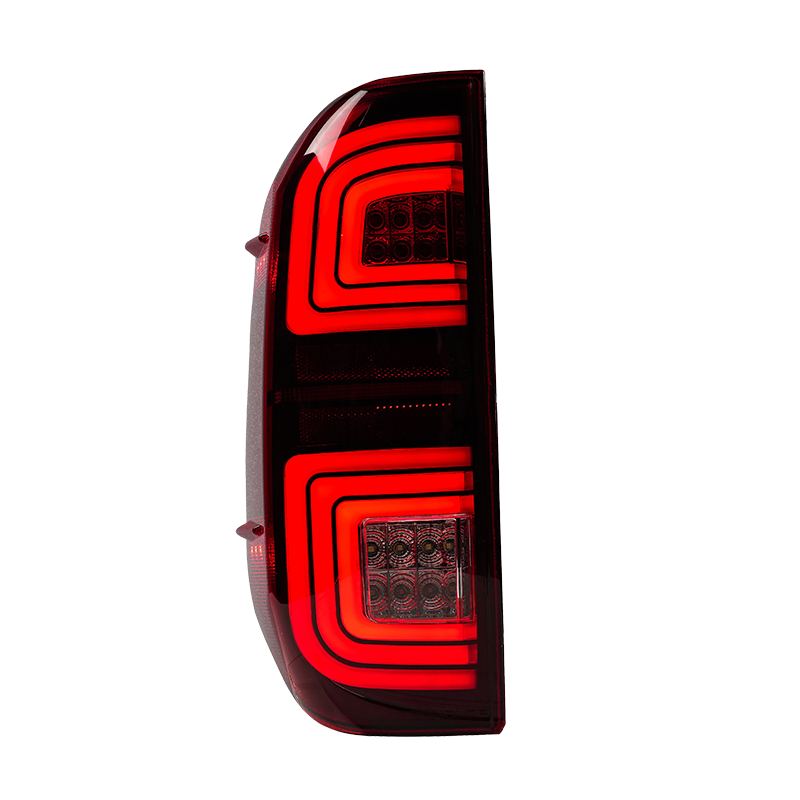
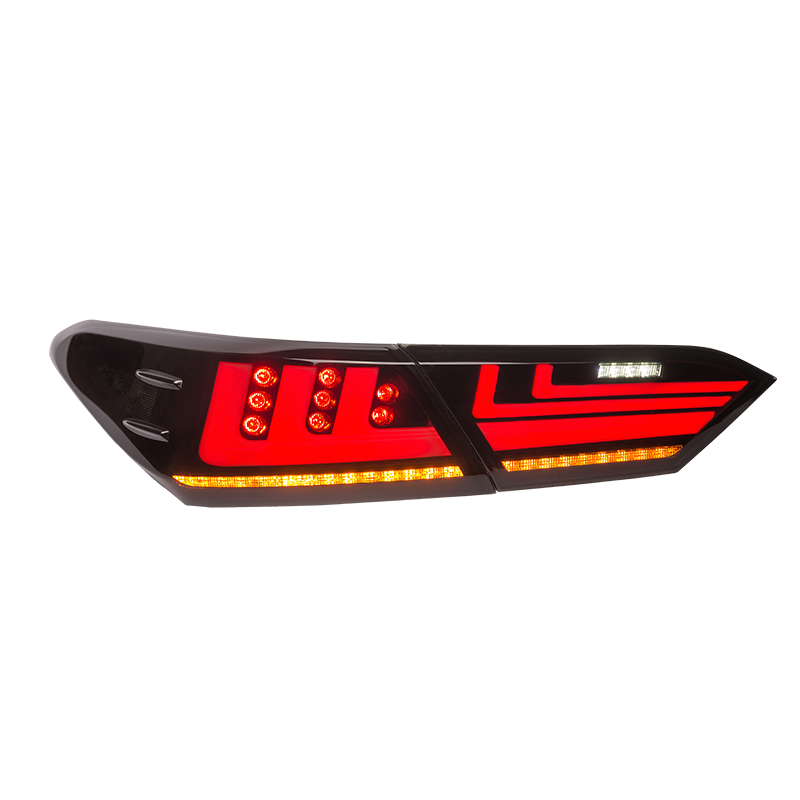
At first glance, Stop Turn Tail Reverse Lights can seem like a simple combination of several bulbs inside one housing. In reality, a multi-function rear lamp has to manage different lighting signals while maintaining clear visibility, reliable electrical operation, and compliance with vehicle lighting requirements.
For automotive manufacturers, trailer builders, aftermarket suppliers, and lighting distributors, combining several functions into one lamp can simplify installation and save space. But it also creates design challenges. The lamp has to distinguish between braking, turning, tail illumination, and reversing while producing the right light output for each function.
So how can one lamp handle four different jobs? The answer comes from a combination of separate LED circuits, optical design, electrical control, and signal logic.
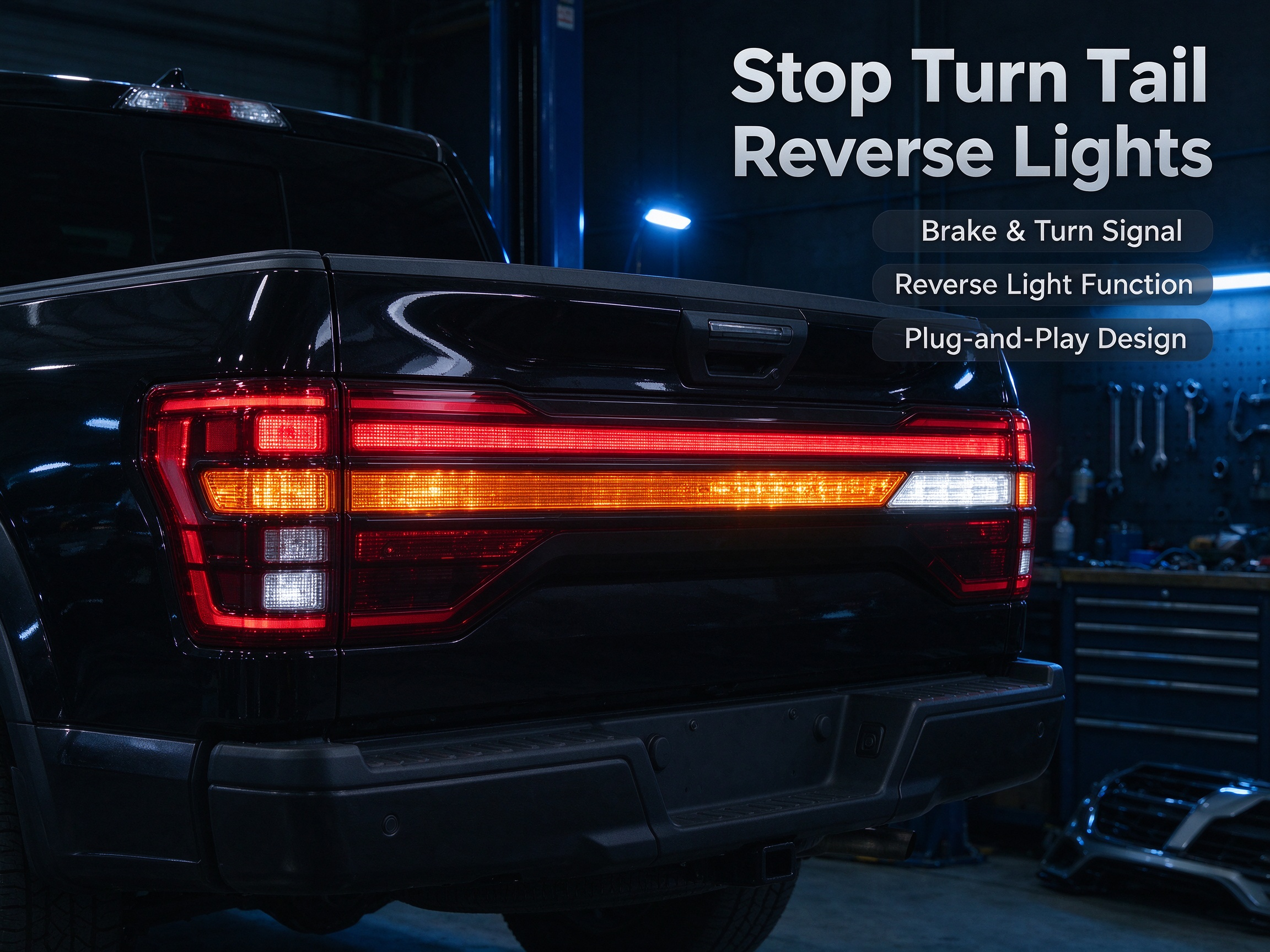
A stop turn tail reverse light is a rear vehicle lighting assembly designed to combine four functions in a single lamp:
Instead of installing four completely separate lamps, manufacturers can integrate these functions into one housing.
The exact construction varies between products. Some lamps use different LED groups for each function, while others use shared optical areas with separate electrical control. The housing may also contain multiple lenses, reflectors, circuit boards, or optical sections.
This approach is common where rear installation space is limited or where a cleaner lighting layout is preferred.
The key is that the lamp does not necessarily use one light source for everything.
A typical LED assembly can contain several independently controlled LED circuits. The vehicle's wiring harness sends different electrical signals to the appropriate circuit.
For example, the basic operating logic can look like this:
| Lighting function | Typical operation | Main purpose |
|---|---|---|
| Tail | Low-intensity output | Shows vehicle presence |
| Stop | Higher-intensity output | Warns following traffic of braking |
| Turn | Flashing output | Indicates direction |
| Reverse | Separate white output | Illuminates rear area and signals reverse movement |
The lamp's electronics and LED arrangement determine how these signals are converted into visible light.
For example, the tail function may illuminate red LEDs at a lower output. When the brake signal is activated, another circuit can increase red output or activate additional LEDs. A turn signal can flash a dedicated section, while the reverse function activates a white LED section.
This is why the internal circuit design matters just as much as the outside appearance.
Stop and tail lighting are both normally associated with the rear red lamp area, but they have different purposes.
Tail lighting needs to remain visible without being excessively bright. It provides a continuous indication that the vehicle is present, especially at night or in poor visibility.
Brake lighting needs a stronger visual signal because it communicates an immediate change in vehicle movement.
LED technology makes this relatively straightforward. A manufacturer can use different LED groups or control the same LED group at different current levels, depending on the lamp design.
However, brightness should not be judged simply by looking at the lamp on a workbench. The complete optical system, including the lens, reflector, LED position, and viewing angle, affects the final result.
For B2B buyers, it is useful to ask for the manufacturer's photometric specifications and test data when the application requires regulated automotive lighting.
The turn function adds another requirement: the light needs to flash in a recognizable pattern.
Depending on the vehicle electrical system, the flashing signal may be generated by the vehicle's flasher module, body control module, or another electronic controller. The lamp itself may simply receive the switching signal and illuminate the corresponding LED circuit.
Some modern lamps have more complex electronics, especially when the vehicle uses CAN bus systems or monitors bulb load.
For aftermarket and trailer applications, compatibility deserves particular attention. An LED lamp consumes less electrical power than many traditional incandescent lamps. On some vehicles, this difference can cause bulb-out warnings or unusual flashing behavior if the electrical system expects a higher load.
A manufacturer may therefore offer lamps with integrated load management or other circuit solutions for specific applications.
Reverse lighting has a different visual requirement from stop, tail, and turn functions.
The reverse signal is generally produced with white light because it needs to indicate that the vehicle is moving backward. It can also provide some illumination behind the vehicle, although the actual amount of useful illumination depends on lamp output, lens design, mounting position, and vehicle configuration.
For this reason, many combination lamps divide the housing into red and clear sections.
The red portion handles functions such as stop, tail, and turn, while a clear section contains white LEDs for reverse operation.
The separation does not have to mean separate housings. Optical partitions inside the same lamp can keep the functions visually distinct while allowing all four functions to occupy one assembly.
Putting four LED functions into one housing does not automatically create a good lamp.
The light needs to leave the housing with an appropriate distribution. Engineers may use lenses, reflectors, light guides, diffusers, and internal partitions to control where the light goes.
A lens can spread light horizontally, vertically, or in a more controlled pattern. Reflectors can redirect LED output toward specific areas. Light guides can create a more continuous appearance across a lamp surface.
These choices affect both appearance and functional visibility.
A lamp that looks bright when viewed directly may still have poor performance at certain angles. Automotive rear lamps need to be evaluated across their intended viewing range, not just from directly behind the vehicle.
LEDs are generally efficient, but they still generate heat.
When several lighting functions operate at the same time, the thermal load can increase. This is particularly relevant when brake and tail functions are active together or when multiple LED sections are illuminated continuously.
Heat management can involve:
Excessive heat can shorten LED life or affect electronic components.
A manufacturer developing a high-volume automotive lamp should therefore consider thermal testing as part of product validation. Buyers sourcing lamps for commercial vehicles or long operating cycles should also ask how the lamp has been tested under continuous-use conditions.
Rear lamps are exposed to rain, road spray, dust, vibration, temperature changes, and sometimes cleaning chemicals.
A multi-function lamp contains electrical connections and electronic components, so moisture protection is important.
The housing may use a sealed lens-to-body joint, gasket, potting material, waterproof connector, or a combination of these methods. The actual protection level depends on the design.
A suitable product should be evaluated for its intended environmental conditions. Vibration and thermal cycling are also worth considering because repeated expansion and contraction can place stress on seals and connections.
For fleet and aftermarket buyers, connector compatibility is another practical issue. A lamp can have good optical performance but still create installation problems if the connector, mounting points, polarity, or wiring arrangement does not match the vehicle.
This depends on the electrical and control design.
In some applications, certain functions may operate simultaneously. For example, tail lighting can remain active while the brake is applied. A turn signal can also operate while the tail or brake function is active.
The lamp needs to handle these combinations without producing confusing output.
This is where circuit priority and signal control become important. If the same LED group is being used for multiple functions, the electronics need to determine how the outputs should be combined.
A dedicated multi-circuit design can make this easier because each function has its own LED group. Other designs use control electronics to adjust output according to the received signals.
B2B buyers should therefore check the lamp's wiring diagram and function table, especially when integrating it into a custom vehicle or trailer electrical system.
The physical appearance is only one part of the purchasing decision.
A buyer should first identify the exact application. A passenger vehicle, trailer, truck, agricultural machine, and off-road vehicle may have very different installation and lighting requirements.
The following specifications are useful during supplier evaluation:
| Specification | Why buyers should check it |
|---|---|
| Operating voltage | Must match the vehicle electrical system |
| LED configuration | Determines how functions are produced |
| Light output | Important for functional visibility |
| Viewing angle | Affects visibility from different positions |
| Housing material | Influences durability and environmental resistance |
| Connector type | Determines installation compatibility |
| Mounting dimensions | Prevents fitment problems |
| Waterproof protection | Important for outdoor vehicle use |
| Operating temperature | Indicates suitability for the application |
| Compliance documentation | Helps verify regulatory suitability |
Samples are especially important for automotive lighting because electrical compatibility and physical fit can vary considerably between vehicles.
A good sample evaluation should include basic installation checks, wiring verification, illumination of each function, simultaneous-function testing, and environmental considerations relevant to the application.
For production projects, manufacturers may also perform tests involving vibration, temperature cycling, water ingress, electrical transients, and long-duration operation.
The exact test program depends on the product and required standards.
Buyers should ask suppliers which standards apply to their intended market and request the relevant test reports or compliance documents. This is more useful than relying on general marketing descriptions.
A combined lamp can reduce the number of individual housings and simplify the rear lighting layout. It may also free up mounting space and give vehicle designers more flexibility.
For trailer manufacturers and vehicle upfitters, fewer separate components can make wiring and assembly more straightforward. A single housing can also help create a consistent visual design.
However, integration should not come at the expense of serviceability or electrical compatibility.
If one housing contains several functions, a failure affecting the whole assembly may require replacement of the complete lamp. Buyers should consider whether this fits their maintenance strategy and spare-parts requirements.
Stop Turn Tail Reverse Lights work by combining different electrical circuits and optical functions inside one coordinated assembly. The basic idea is simple, but getting the details right involves LED selection, circuit control, brightness management, heat dissipation, sealing, optics, connectors, and testing.
For B2B buyers, the most useful approach is to evaluate the complete system instead of focusing on LED count or appearance alone. The lamp should match the vehicle voltage, mounting arrangement, wiring system, environmental conditions, and applicable lighting requirements.
When suppliers can provide clear specifications, wiring information, test results, and samples for real application testing, buyers have a much better basis for choosing a suitable combination lamp and avoiding problems after installation.
We are a modern headlight manufacturer that integrates R&D, design, production and sales. We mainly produce headlamps, taillights, daytime running lights and other automotive lighting products.
Add: No.3 Shiyang Road, Ningxi Town, Huangyan District, Taizhou City, Zhejiang Province, China
Tel: +86-13105675552 / +86-15606586299
Fax: +86-576-89161556
E-mail: [email protected]
Copyright © Taizhou Baozhiwei Vehicle Industry Co.,Ltd. All Rights Reserved.

 English
 русский
 Español