Call us

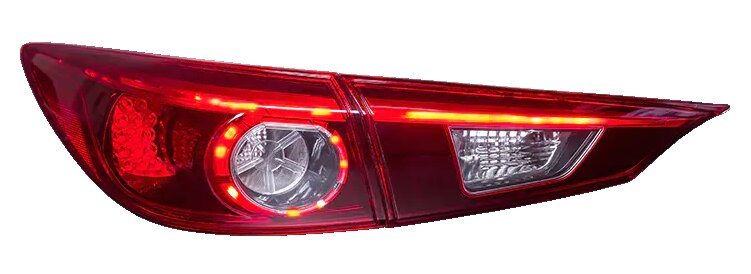
Tail lights may seem like simple components, but they do a lot more than most people think. They are essential for signaling, keeping vehicles visible, and helping drivers communicate intentions on the road. Stop Turn Tail Reverse Lights in particular combine multiple functions—stopping, turning, reversing, and running lights—into one system. The shape and style of these lights matter, not just for looks but also for function. Round, oval, or rectangular—each style has its own strengths and challenges.
A lot of this work happens in a Stop Turn Tail Reverse Lights Manufacturer, where engineers and designers figure out how to make lights reliable, safe, and suitable for different vehicle types. From small trailers to large commercial trucks, the right shape ensures proper fit, easy installation, and clear visibility.
Tail lights come in various shapes. The most common are round, oval, and rectangular, but there are other geometric variations as well. The shape affects light spread, mounting options, and the overall look of the vehicle.
The shape influences how the light distributes across the lens. Round lights spread evenly in a circular pattern. Oval lights give wider coverage horizontally. Rectangular lights can focus light in specific zones. Choosing the right style is a balance between appearance, function, and vehicle compatibility.
Round lights have been used for decades. Their design is straightforward: a circular lens with a bulb or LED array inside.
Advantages include:
They are popular for trailers and smaller trucks. In a Stop Turn Tail Reverse Lights Manufacturer, round lights are simpler to produce. Circular tooling and molds are easier to manage, assembly is straightforward, and quality control focuses mainly on the lens and seal integrity.
Oval lights are elongated, usually horizontally. They are designed for vehicles with wider rear profiles.
Practical benefits:
Manufacturing oval lights is slightly more complex. The lens and housing require molds that maintain uniform thickness. Mounting holes must align with flange positions, and gaskets or adhesives are used to prevent water ingress. Oval designs often appear on pickups, vans, and enclosed trailers.
Rectangular lights are common on commercial vehicles or custom builds. They can be mounted flat, recessed, or with a flange.
Characteristics include:
Other geometric shapes exist too, like trapezoidal or vertical bars. They are usually for design-specific or aftermarket applications. Manufacturing these shapes needs careful planning, especially to ensure sealing, consistent light output, and proper alignment of internal LEDs or bulbs.
The lens material affects light quality, durability, and maintenance. Most lenses are made from polycarbonate or acrylic, with coatings for UV protection and scratch resistance.
Texturing inside the lens can help spread light evenly. Some designs include horizontal or vertical ridges to direct light for better signaling. These subtle differences influence how effective the light is from different angles, such as side visibility or reversing in tight spaces.
LED technology has changed tail light design. Compared to incandescent bulbs, LEDs are compact, energy-efficient, and more durable.
Traditional incandescent bulbs are still used for cost or replacement simplicity. They are less complex in wiring and heat management but are heavier and less durable under vibration. Stop Turn Tail Reverse Lights Manufacturers often provide both options depending on customer requirements.
Producing these lights requires attention to detail, especially in a Stop Turn Tail Reverse Lights Manufacturer. Key factors include:
Mold precision: Round shapes are simpler, oval and rectangular need careful design.
Assembly lines vary depending on the shape. Round units are quick and efficient, while oval and rectangular lights take more time for mounting the lens, gasket, and screws. Automation helps reduce errors, but manual inspection remains important.
The shape of Stop Turn Tail Reverse Lights affects how they are mounted on vehicles. Round lights usually use grommets, pressing into a flexible rubber ring that fits a circular hole in the body or frame. It's simple—just push and the light snaps in place. Oval lights often use a flange; screws or bolts secure the outer rim to a flat surface. Rectangular lights can use a flange or recessed mounting, sitting nearly flush inside a custom-cut opening.
Wiring is mostly standard—ground wire plus separate lines for stop, turn, tail, and reverse—but connector placement varies depending on the housing shape. Round units are simple, while oval and rectangular lights need careful positioning to allow easy access.
Installation steps differ slightly. Round lights simply push in and lock. Oval and rectangular units require screwdrivers or wrenches to secure properly. After mounting, checking the seal is essential. Without a proper seal, moisture can build up inside the housing, affecting performance.
The shape of lights influences how clearly they communicate with other drivers.
In low-light conditions, all shapes perform well if they are clean and aimed correctly. Rain and fog can show differences. Round lights diffuse broadly, while oval and rectangular designs may maintain better contrast from certain angles. Off-road or dusty conditions test durability more than shape, though sealed housings reduce internal fogging across all types.
Regulations require red for stop, turn, and tail, and white for reverse, with enough brightness to be visible from behind. Round, oval, and rectangular designs meet these standards through lens patterns and internal layout.
Cleaning the lights is straightforward. A simple wipe with mild soap removes road grime and keeps the light strong.
Durability relates closely to both shape and mounting. Round lights distribute vibration forces evenly, making them more resistant to stress. Oval formats handle horizontal shaking well, while rectangular units may need stronger support on flat panels.
Sealing protects the light from rain, dust, and pressure washing. Round grommet-mounted lights rely on the rubber ring. Oval and rectangular lights typically use gaskets or adhesives along the edges. Proper installation ensures environmental protection and reduces maintenance issues.
Long-term performance differs slightly by shape. Round lights are less likely to develop edge cracks. Oval and rectangular lights may show minor lens haze if seals loosen, but with regular inspection, problems remain minimal.
| Feature | Round Lights | Oval Lights | Rectangular Lights |
|---|---|---|---|
| Mounting Style | Grommet | Flange | Recessed / Flange |
| Installation Effort | Low | Moderate | Moderate to High |
| Visibility Pattern | Even circular | Horizontal spread | Defined linear zone |
| Vibration Resistance | High | High | Moderate (needs support) |
| Maintenance | Easy | Medium | Medium (check seals) |
| Environmental Protection | Rubber seal | Gasket / Adhesive | Gasket / Adhesive |
Round lights remain common for trailers and smaller vehicles. They are appreciated for simplicity and quick replacement. Oval lights are increasingly seen on pickups and work trucks. Their low-profile shape and wider coverage make them appealing. Rectangular lights fit commercial vehicles or custom builds with flat panels.
User preferences often match the vehicle type:
Fleet operators favor consistent formats for easier stocking and maintenance. Manufacturers respond to this by offering a range of shapes to cover trailers, trucks, and commercial vehicles efficiently.
Shape also influences production feasibility. Round units use simple circular molds. Oval and rectangular shapes require more precise molds to maintain uniform thickness and proper sealing. Assembly is easier with round lights, while rectangular designs require careful alignment of linear light sections.
Other decision factors include:
Trailers often use round or oval lights to fit standard grommet holes. Trucks and vans usually prefer rectangular lights to match panel fits. Each shape has trade-offs: round lights are easy to install and provide even output, oval lights give wider coverage in a low-profile design, and rectangular lights allow custom layouts but may need additional support.
Stop Turn Tail Reverse Lights continue to evolve. Smaller light sources allow more compact or intricate shapes. Slight curves help lights follow modern vehicle contours better.
Integration with vehicle systems is gradually expanding. Lights may coordinate with diagnostics or other rear functions. Modular designs could let builders swap sections for different needs.
Manufacturing adapts with refined molding, automated placement of components, and improved sealing methods. These changes support more shapes while maintaining quality and reliability.
Round, oval, rectangular, and other designs all serve the same purpose: clear signaling. Shape affects mounting, visibility, durability, and appearance. Choices depend on vehicle fit, usage conditions, ease of installation, and long-term performance. Stop Turn Tail Reverse Lights Manufacturer provide these options to meet real-world demands on the road.
We are a modern headlight manufacturer that integrates R&D, design, production and sales. We mainly produce headlamps, taillights, daytime running lights and other automotive lighting products.
Add: No.3 Shiyang Road, Ningxi Town, Huangyan District, Taizhou City, Zhejiang Province, China
Tel: +86-13105675552 / +86-15606586299
Fax: +86-576-89161556
E-mail: [email protected]
Copyright © Taizhou Baozhiwei Vehicle Industry Co.,Ltd. All Rights Reserved.

 English
 русский
 Español