Call us

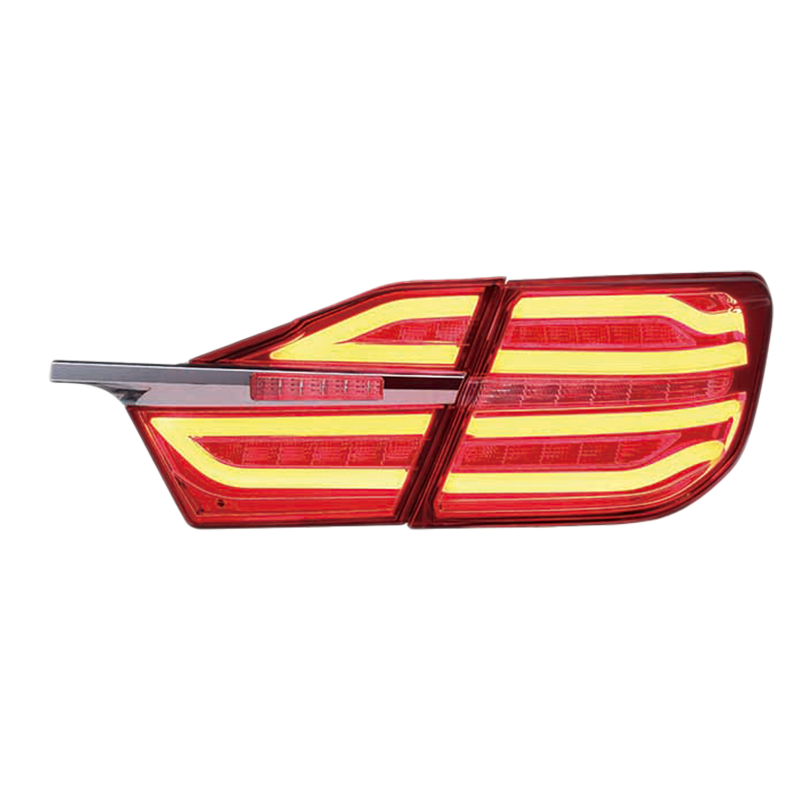
A tail light looks simple enough sitting on the back of a car, but the actual light pattern behind that lens comes down to a pile of small design decisions stacked on top of each other. When one section glows brighter than the rest, the light source itself isn't necessarily to blame. Internal layout, optical structure, how carefully everything gets assembled, even the outer lens — all of it shapes how light actually reaches the road and everything around it.
Uneven lighting stands out especially fast in customized automotive lighting. Drivers want something distinctive to look at, sure, but they still need a clean, consistent lighting effect underneath all that style. A design that looks great on paper can behave in a completely different way once the parts actually come together.
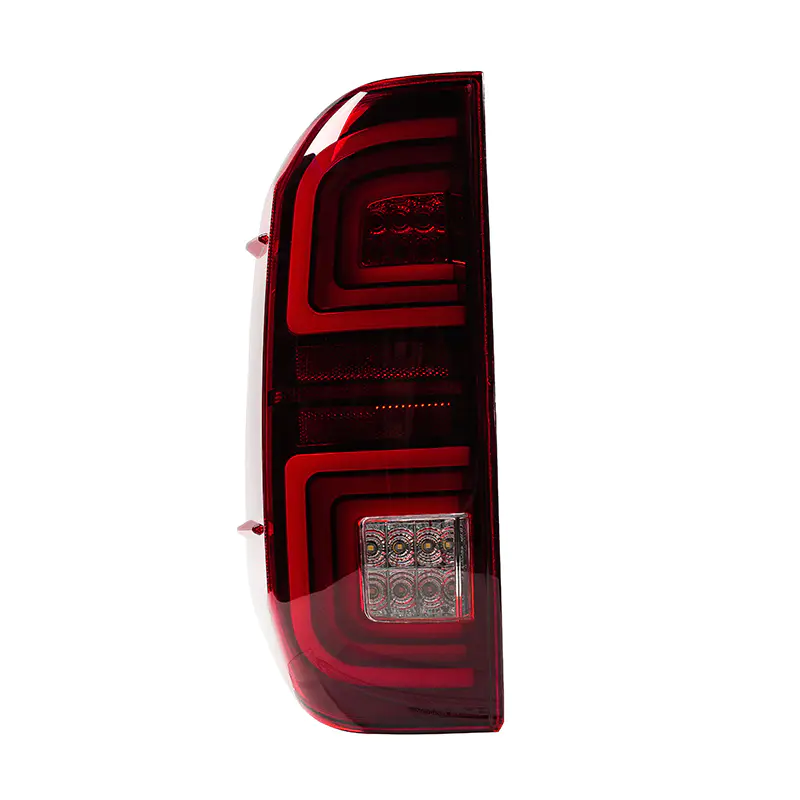
For manufacturers and buyers, understanding where uneven illumination actually comes from makes both product development and quality checks a lot more grounded. It's not just about cramming in more light. It's about controlling where that light lands across the area it's meant to cover.
Where LED chips sit has a pretty direct say in the visible light pattern. Space the light sources too far apart, and some areas end up dim. Bunch them together in certain spots, and those same spots start looking noticeably brighter than everything else.
The lamp's shape plays into this too. A long, narrow tail light demands a different chip arrangement than a compact housing would. Curved surfaces throw in extra complications, since the distance between light source and outer lens keeps shifting as the housing curves.
During design, manufacturers really need to think about the whole light-emitting area at once, rather than eyeballing individual chips in isolation.
| Design Factor | Possible Effect |
|---|---|
| LED position | Influences light distribution |
| Chip spacing | Can affect visible brightness differences |
| Lamp shape | Changes the available lighting area |
| Light source direction | Influences how light enters internal structures |
| Housing depth | Affects the distance between components |
A layout that's been thought through cuts down on obvious bright and dark patches. It also helps the finished light pattern read as more consistent across the whole lamp, not just in isolated spots.
For Custom Car Led Tail Lights, this matters even more since custom shapes often don't follow the same proportions as standard factory lighting units.
A light guide moves and spreads light around inside the lamp. Its shape decides whether that light ends up spread evenly or clumped near certain spots.
Mismatch the internal guide against where the LED source actually sits, and light won't travel through the structure the way it's supposed to. Some sections light up brighter, while spots farther away end up looking weaker by comparison.
The guide's surface matters too. Even small quirks in internal geometry change how light moves through the part. That's exactly why a light guide needs consideration alongside the LED arrangement, not treated as some separate, standalone component.
Curved light guides bring their own extra wrinkles into design. Light needs to follow the intended visual path while still looking consistent once it passes through the outer lens.
A workable design process tends to look at:
Working through this early helps manufacturers catch uneven illumination before the whole lamp assembly is locked in.
Optical components decide how light gets spread, redirected, or softened on its way out. A single lamp might pack in several internal elements working together to build the final look seen from outside.
Get these components mismatched, and light piles up in one spot while another section ends up dimmer, even with identical LED sources feeding both areas.
The outer lens plays its part too. Texture, shape, and internal surface all change how light actually looks to someone standing outside the vehicle.
That's exactly why picking a good LED chip alone doesn't guarantee an even lighting effect. The whole optical path — from chip all the way to the outside of the car — needs treating as one connected system.
For a manufacturer working on customized lamps, optical testing helps pin down whether a visible difference traces back to the light source, the guide, the reflector, the lens, or some mix of all four.
The aim is a lighting pattern that reads as intentional, not just a scattered handful of bright points sitting next to each other.
Even a lighting structure that's been designed carefully can end up uneven if assembly isn't consistent from unit to unit.
Components need to land exactly where they're meant to sit once everything's installed. A tiny shift in a light guide, reflector, lens, or LED board changes the relationship between all the parts around it.
That shows up especially clearly in lamps with narrow lighting strips or intricate internal patterns. Pack components close together, and a small positioning slip has an outsized effect on the final look.
Assembly trouble tends to show up as:
Quality control, then, really needs to examine the finished assembly, not just check components before they ever get put together.
Assembly consistency matters even more when producing multiple units for the same vehicle model. Assemble each lamp a little differently, and the left and right sides can end up looking noticeably different from each other.
People often think of the outer lens as just a protective cover, but it shapes the final lighting appearance a lot more than that.
Its shape decides how light actually exits the lamp. Texture on the surface can soften individual points of light, while a smooth surface tends to expose differences between light sources more clearly instead of hiding them.
The lens also has to match whatever's going on internally with the lighting structure. Design a lens without thinking about the underlying light distribution, and it can end up making bright spots stand out more instead of blending them together.
Color factors in here too. Tinted lenses change how light reads from outside. A darker look might be exactly what a custom build is going for, but the lighting effect underneath still has to work the way it's supposed to.
That matters when developing Smoked out Headlights and Taillights. The visual treatment really needs weighing alongside the internal lighting structure, rather than treated as some purely cosmetic afterthought.
Water protection carries real weight in automotive lighting, since moisture can mess with internal components and chip away at long-term performance.
A housing needs to shield the internal lighting structure while keeping the relationship between its parts intact. Sealing materials, joining methods, vents, housing geometry — all of it shapes how the finished assembly actually holds up.
The tricky part is balancing protection against internal stability. A housing that doesn't seal properly lets moisture creep into the lamp. Meanwhile, internal pressure swings and outside environmental conditions add their own wrinkles into the housing design.
For Waterproof LED Tail Lights, waterproof construction really needs baking into the whole product design from the start. It shouldn't get bolted on afterward as some separate feature once the optical system's already locked in.
Moisture can leave visible marks inside the lens too. Condensation changes how the lamp looks even when the LED sources underneath are running perfectly fine.
A housing design that's consistent protects both the lighting components themselves and the visual quality of the finished product sitting on the car.
Two lamps built from the exact same design can still end up looking slightly different if manufacturing consistency isn't managed carefully.
How the LED board, light guide, reflector, lens, and housing relate to each other all comes down to how accurately each individual part gets made. Shift one part's shape or position even slightly, and the combined lighting effect shifts right along with it.
That doesn't mean every manufacturing variation ends up visible to the naked eye. The concern grows once several small differences pile up inside the same assembly, though.
A manufacturing process, then, can build in checks across different stages:
| Production Stage | Useful Check |
|---|---|
| Component preparation | Confirm part condition |
| LED board assembly | Check source positioning |
| Optical assembly | Inspect guide alignment |
| Housing assembly | Check component seating |
| Finished lamp | Review the visible lighting pattern |
Checking individual parts alone might miss the bigger picture. The finished lamp gives the clearest sense of how everything actually works together once assembled.
This is one spot where a Tail Light Manufacturer does a lot more than just source components. Manufacturing consistency touches design interpretation, assembly control, inspection, and coordination running across every stage of production.
A lamp can look perfectly uniform sitting on a workbench during production, then look different entirely once it's actually mounted on a car.
Mounting position, surrounding body panels, viewing angle, and how far away someone's standing all shape how the lighting pattern actually reads.
A curved vehicle body can make two otherwise identical lamps look slightly different depending on the angle you're viewing from. Reflections bouncing off nearby surfaces shift the visual impression too.
That's exactly why evaluation needs to happen in the real installation environment. A lighting pattern that looks perfectly balanced on a bench might need a fresh look once it's actually bolted onto the car.
Custom lighting designs make this even more important. Unusual shapes interact with the vehicle's body lines in ways that are genuinely hard to judge from a flat, isolated inspection.
Testing the lamp in its actual mounted position gives designers a far clearer read on how the finished product really looks in practice.
Cutting down on uneven illumination starts with getting the light source, internal structure, optical components, housing, and assembly process all working in step together.
Rather than patching a visible problem right at the end, manufacturers can trace the lighting path all through product development. That makes it a lot easier to spot whether trouble started with layout, component geometry, assembly, or the outer lens.
A handful of practical habits support this:
A balanced lighting effect doesn't come down to how many LEDs are crammed inside the housing. What really decides what drivers and everyone else on the road actually sees is how those sources interact with everything built around them.
Treat chip layout, light guides, optical components, assembly, housing protection, and vehicle installation as connected pieces of one single design process, and uneven lighting becomes something manufacturers can actually spot and manage, both during development and once production's underway.
We are a modern headlight manufacturer that integrates R&D, design, production and sales. We mainly produce headlamps, taillights, daytime running lights and other automotive lighting products.
Add: No.3 Shiyang Road, Ningxi Town, Huangyan District, Taizhou City, Zhejiang Province, China
Tel: +86-13105675552 / +86-15606586299
Fax: +86-576-89161556
E-mail: [email protected]
Copyright © Taizhou Baozhiwei Vehicle Industry Co.,Ltd. All Rights Reserved.

 English
 русский
 Español