Call us

Pickup trucks get used in rough places. Wet highways, muddy job sites, dusty back roads, off-road trails. Through all that, tail lights still have to be visible and working. They tell other drivers you're braking, turning, sitting where you are. So waterproofing and dust resistance aren't nice extras. They're part of what makes a tail light reliable.
Moisture and dust can wreck electrical connections, dim the light, and shorten the assembly's life. Knowing how these environmental factors affect performance helps owners, fleet managers, and parts buyers make smarter calls.
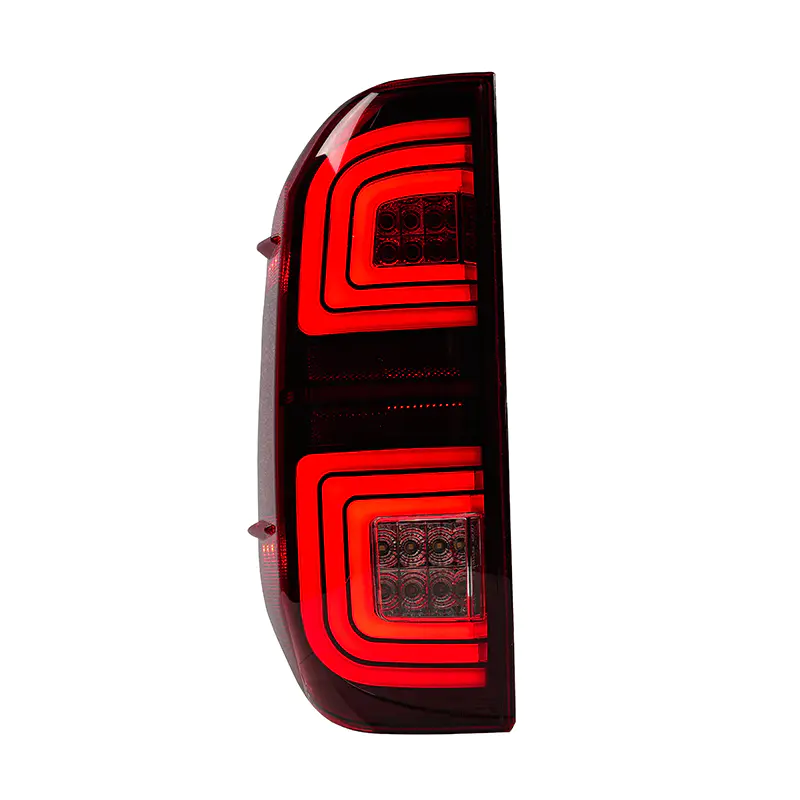
How Waterproofing Protects Pickup Truck Tail Lights
Tail lights have electrical parts, wiring connections, light sources, optical surfaces. Water gets in, and things go wrong. A properly sealed light uses housing seals, gaskets, sealed connectors, and controlled assembly joints to keep water out. The lens-to-housing interface is a common weak spot.
Water can show up as rain and road spray, high-pressure wash, splashes from puddles or flooded roads, or repeated temperature swings that cause condensation. Moisture inside can corrode metal contacts, cause electrical faults, or damage sensitive parts. It can also leave deposits on the inner lens, hurting appearance and light output.
Not every bit of fog means the seal failed. Small temporary fogging happens when temperature and humidity shift. But persistent droplets, standing water, or repeated moisture buildup? Time to inspect. That could mean a sealing problem or a blocked vent.
Why Dust Resistance Matters in Harsh Driving Conditions
Dust resistance matters for trucks in agriculture, construction, mining support, off-road driving. Fine particles sneak through poorly sealed joints, connector openings, damaged housing parts. Once inside, dust builds up on optical surfaces and cuts clarity. Abrasive particles add wear during maintenance or movement. Dust plus moisture can create deposits that are a pain to remove.
Risk depends on particle size, exposure time, housing design, operating conditions. A truck on paved city roads faces different demands than one on unpaved job sites. Good dust protection keeps internals cleaner and lighting more consistent over time.
How Environmental Protection Supports Road Safety
Tail lights communicate. Depending on the assembly, they may include tail lamps, brake lamps, turn signals, reverse lights. Water intrusion or contamination can cause intermittent operation, electrical failures, or reduced visibility. A dead brake lamp means following drivers may not notice deceleration. A bad turn signal makes lane changes and turns less predictable.
Waterproofing and dust resistance protect the components behind those functions. But sealing alone doesn't guarantee safe performance. Light output, lens clarity, electrical reliability, correct installation, and compliance with lighting rules all matter. For commercial fleets, reliable lighting cuts inspection failures and surprise maintenance. Regular checks still matter because impacts, aging seals, loose connectors, and damaged wiring can compromise a well-designed assembly.
Understanding IP Ratings for Pickup Truck Tail Lights
Ingress Protection (IP) ratings describe how well an enclosure keeps out solid particles and water under specified test conditions. The rating has two digits: one for solid-particle protection, one for water protection.
For example, IP67 generally means dust-tight and resistant to temporary immersion under defined lab conditions. It doesn't automatically mean the product survives every real-world situation, like repeated high-pressure washing, hot-water cleaning, or long-term harsh chemicals.
|
IP rating |
Dust protection |
Water protection |
Practical consideration |
|---|---|---|---|
|
IP65 |
Dust protection against harmful ingress; not necessarily dust-tight |
Water jets under specified test conditions |
May suit certain road-use environments |
|
IP66 |
Dust protection against harmful ingress; not necessarily dust-tight |
More powerful water jets under specified conditions |
Relevant where stronger water-jet exposure is expected |
|
IP67 |
Dust-tight |
Temporary immersion under specified conditions |
Useful when temporary immersion protection is required |
|
IP68 |
Dust-tight |
Immersion under conditions specified by the manufacturer |
Confirm the actual depth, duration, and test requirements |
These ratings describe tested enclosure performance, not a universal durability promise. Buyers should check the manufacturer's test docs and confirm whether the rating applies to the complete assembled tail light, including connectors and installation interfaces.
Key Design Features That Improve Waterproofing and Dust Resistance
Sealed Housings and Quality Gaskets
A durable housing and properly fitted gasket keep water and dust from entering through assembly joints. Material choice matters because seals must hold up under temperature changes, vibration, and aging.
Reliable Electrical Connectors
Connectors are weak points. Appropriate connector seals, secure locking mechanisms, and correctly installed wiring reduce moisture-related electrical faults.
Durable Lenses and Housing Materials
The lens has to handle road debris, weather, routine cleaning. UV resistance matters too because sunlight can discolor or embrittle some plastics. Housing materials should keep their structural integrity under expected conditions.
Controlled Ventilation
Some assemblies use pressure-equalization vents to manage temperature and pressure changes. These vents must limit water and dust entry while allowing intended airflow. Blocking a vent during cleaning or repair can mess up its function.
How to Choose and Maintain Weather-Resistant Tail Lights
When picking replacement tail lights, look at:
Maintenance matters just as much. Periodically inspect lenses for cracks, check for loose connectors, look for persistent condensation or water. Clean the exterior with methods suitable for the product. Avoid excessive pressure near seams and connectors unless the manufacturer confirms the assembly can take it. For fleet vehicles in dusty or wet places, scheduled lighting inspections can catch problems before they cause a failure on the road.
Choosing Pickup Truck Tail Lights for Long-Term Reliability
Waterproofing and dust resistance protect pickup truck tail lights from moisture, contamination, and electrical damage. These features matter for trucks facing frequent rain, road spray, construction dust, or off-road conditions.
A sensible choice combines suitable ingress protection, durable materials, reliable connectors, proper vehicle compatibility, and verified lighting performance. Check product specs and maintain the assembly regularly. That's how owners and fleet operators improve lighting reliability and support safer driving in tough environments.
We are a modern headlight manufacturer that integrates R&D, design, production and sales. We mainly produce headlamps, taillights, daytime running lights and other automotive lighting products.
Add: No.3 Shiyang Road, Ningxi Town, Huangyan District, Taizhou City, Zhejiang Province, China
Tel: +86-13105675552 / +86-15606586299
Fax: +86-576-89161556
E-mail: [email protected]
Copyright © Taizhou Baozhiwei Vehicle Industry Co.,Ltd. All Rights Reserved.

 English
 русский
 Español