Call us

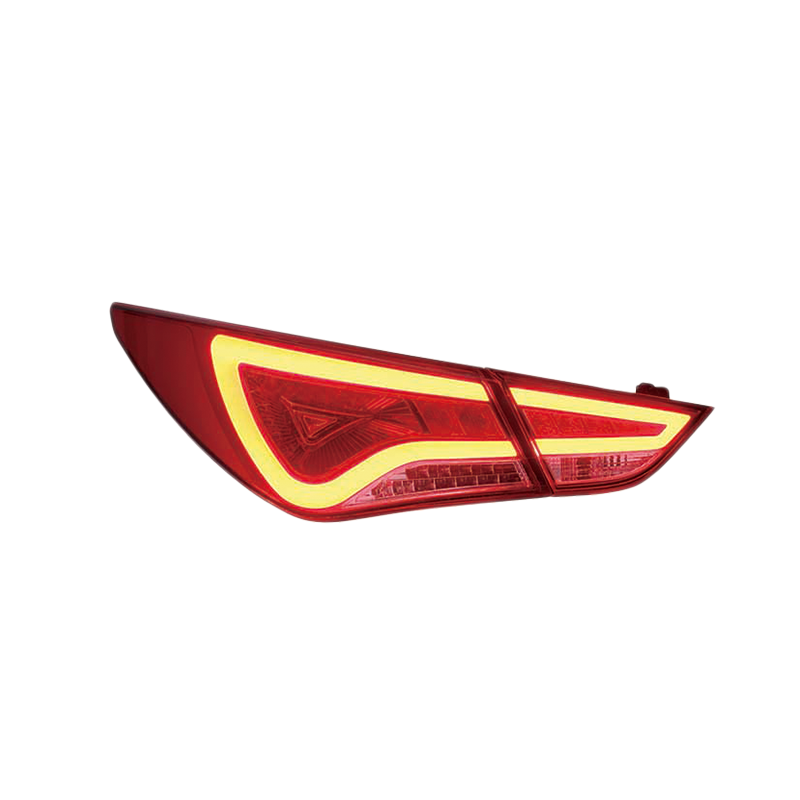
Baozhiwei Vehicle Industry, as a professional automotive tail lamp manufacturer integrating R&D, production, and sales, we are proud to present to you our tail lamp products tailored for Hyundai series cars.
Our products are carefully designed to ensure a great match with the Hyundai series of models. Our engineers have studied the rear structure of Hyundai models in depth to ensure that each tail lamp can be installed seamlessly and provide outstanding visual effects and functional performance.
We use advanced LED lighting technology, which not only improves the brightness and uniformity of the tail lamp but also greatly reduces energy consumption. In addition, the long life characteristics of LED also reduce the frequency of replacement, saving maintenance costs for car owners.
We choose high-quality materials to manufacture tail lamps. These materials are specially treated with outstanding weather resistance and impact resistance to ensure that the products can maintain conditions under various environmental conditions.
Our products undergo a series of strict quality inspection processes before leaving the factory, including but not limited to photometric testing, vibration testing, and temperature resistance testing, to ensure that each tail lamp can meet high standards.
We adhere to the concept of environmentally friendly production, from the selection of raw materials to the control of the production process, we strive to reduce the impact on the environment and contribute to sustainable development.
We understand the unique needs of each customer and provide personalized customization services. Whether it is color, shape, or function, we can customize it according to the specific requirements of customers to ensure that each tail lamp can meet the personalized needs of customers.
By choosing Baozhiwei, you not only choose a high-quality Hyundai series car tail lamp but also choose a trustworthy partner. We look forward to working with you to create a better future.
Car lighting has become part of vehicle styling as well as a genuinely practical part of road communication that other drivers depend on. Drivers may want a rea...
READ MOREA customer drops off their sedan at a body shop wanting a set of custom tail lights installed before the weekend car meet. The lights arrived from an online ord...
READ MORETail lights do more than add a finishing touch to how a vehicle looks parked in a driveway. The way light spreads across the rear of a vehicle can shape how the...
READ MOREVehicle tail lights are easy to overlook when they work exactly as expected. A driver following behind simply sees a clear rear signal glowing through the dark,...
READ MOREVehicle lighting has to do two jobs at once, and both matter equally. It helps the driver actually see the road ahead, while also letting other drivers recogniz...
READ MOREHyundai, a global supplier in automotive design and technology, has made notable strides in enhancing the lighting systems in its vehicles, particularly with the introduction of custom LED tail lamps. These Custom LED Tail Lamps for Hyundai combine the latest in LED technology with sleek, modern designs, providing drivers with a tail light system that is not only energy-efficient but also visually striking.
Improved Visibility and Safety: Custom LED Tail Lamps for Hyundai s are brighter and more efficient than traditional incandescent bulbs, ensuring that the vehicle is easily visible to other drivers, especially at night or in low-light conditions. For Hyundai, incorporating custom LED tail lamps across its range—such as on the Sonata, Elantra, or Tucson—helps improve the overall safety of the vehicle. The enhanced brightness makes the vehicle stand out more clearly from a distance, while the faster illumination time of LEDs ensures quicker signaling to other road users.
Energy Efficiency and Longevity: One of the key advantages of Custom LED Tail Lamps for Hyundai is their energy efficiency. LEDs use significantly less power than traditional bulbs, reducing the strain on the vehicle's electrical system. Additionally, LEDs have a much longer lifespan, often lasting tens of thousands of hours, which the need for frequent replacements.
Sequential tail lights have become one of the talked-about features in modern automotive lighting. Initially seen in high-end luxury cars and performance vehicles, these dynamic lighting systems have since trickled down into mainstream models, becoming a prominent feature in both premium and everyday vehicles. Sequential tail lights are characterized by their unique, sweeping lighting effect, where the light illuminates in a sequential pattern from one end to the other, typically used for turn signals or braking lights.
Enhanced Visibility and Communication: One of the significant advantages of sequential tail lights is their ability to enhance communication between drivers. The sequential lighting pattern, where the LEDs light up in a flowing motion (usually from inside to outside), serves as a more visible indicator of a car’s intentions. This is particularly effective in making turn signals more noticeable to other drivers, especially in busy traffic conditions, at night, or during adverse weather conditions. The sweeping light draws more attention than a static blink, which improves overall road safety.
Modern Aesthetic Appeal: Sequential tail lights are not just functional—they also offer a highly modern and stylish visual element to vehicles. Many car owners and manufacturers choose sequential lighting for its futuristic, dynamic look. The fluid motion of the light sequence conveys a sense of high-tech sophistication, which aligns well with contemporary automotive design trends. For instance, high-end brands like Audi and BMW have integrated sequential tail lights in their vehicles, enhancing the luxury appeal of their cars. Similarly, Hyundai has begun to incorporate sequential lighting into models like the Sonata and Elantra, giving these vehicles a more cutting-edge appearance.
Faster Reaction Time: Sequential lights also provide a faster visual response compared to traditional tail lights. Because the lights light up in a progressive pattern, they can convey the driver’s intention more quickly, helping drivers around the vehicle react faster. For example, when making a lane change or signaling for a turn, the movement of the lights can help other drivers anticipate your actions earlier than with conventional blinkers.
Increased Safety in High-traffic Areas: The added visibility of sequential tail lights can also reduce the likelihood of accidents, particularly in congested areas like city streets or highways. The more dynamic and noticeable the turn signals are, the easier it is for drivers behind the vehicle to recognize a change in direction or speed. This can be especially important when changing lanes on multi-lane highways, where timing and communication are critical to avoid potential collisions.
We are a modern headlight manufacturer that integrates R&D, design, production and sales. We mainly produce headlamps, taillights, daytime running lights and other automotive lighting products.
Add: No.3 Shiyang Road, Ningxi Town, Huangyan District, Taizhou City, Zhejiang Province, China
Whatsapp: +86-13105675552
Tel/Fax: +86-576-89161556
E-mail: [email protected]
Copyright © Taizhou Baozhiwei Vehicle Industry Co.,Ltd. All Rights Reserved.
Sequential Tail Lights Company
 English
 русский
 Español